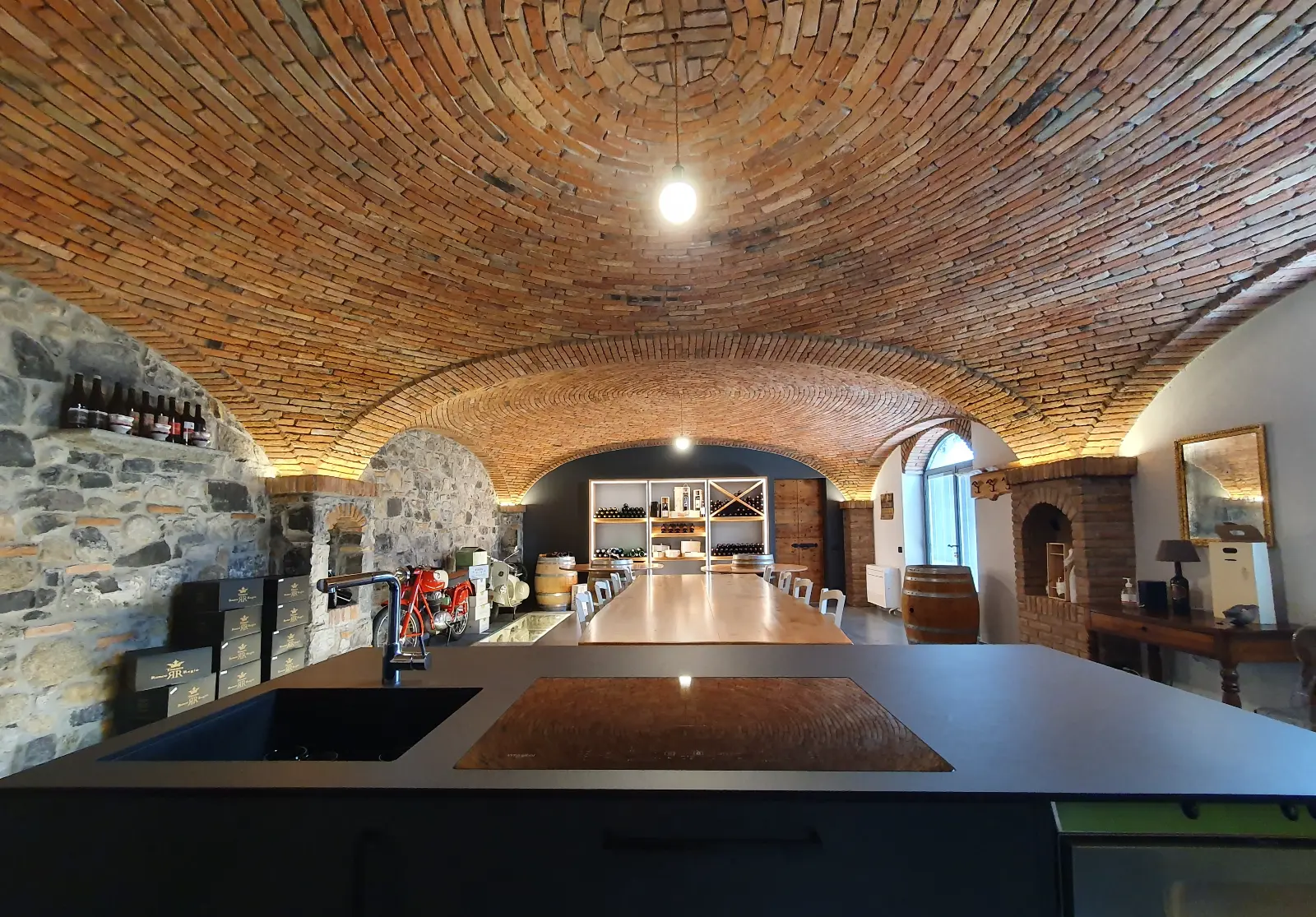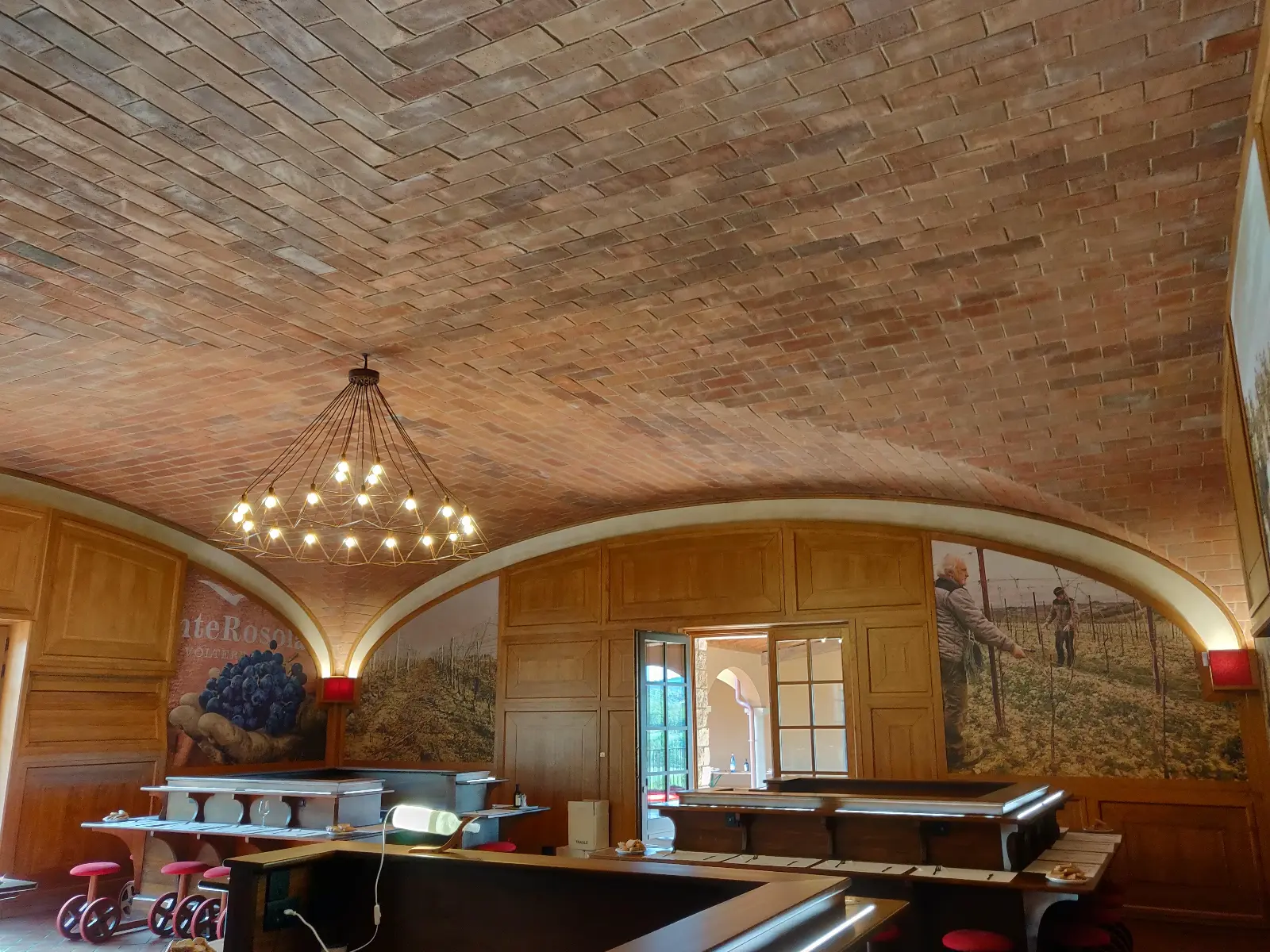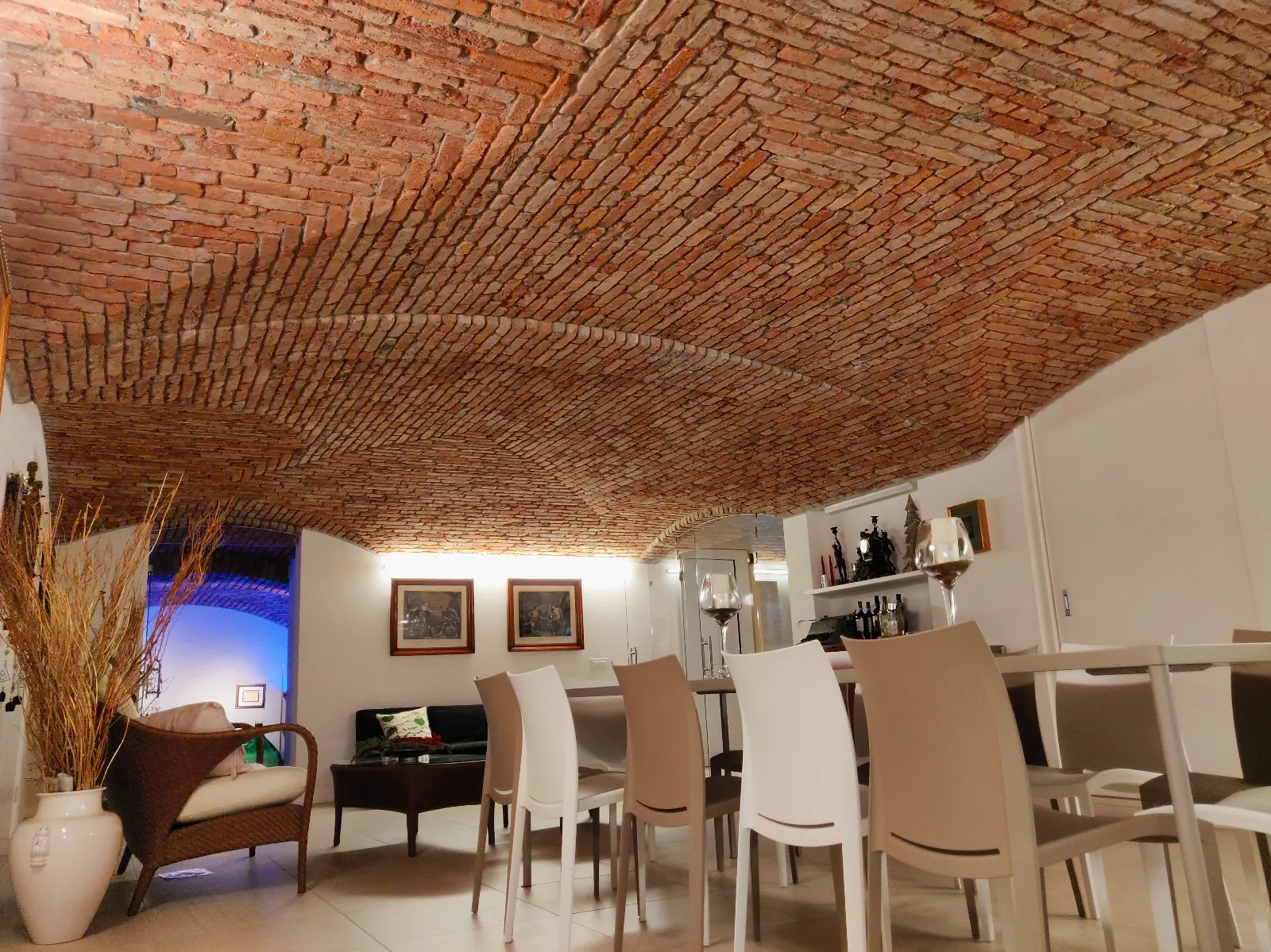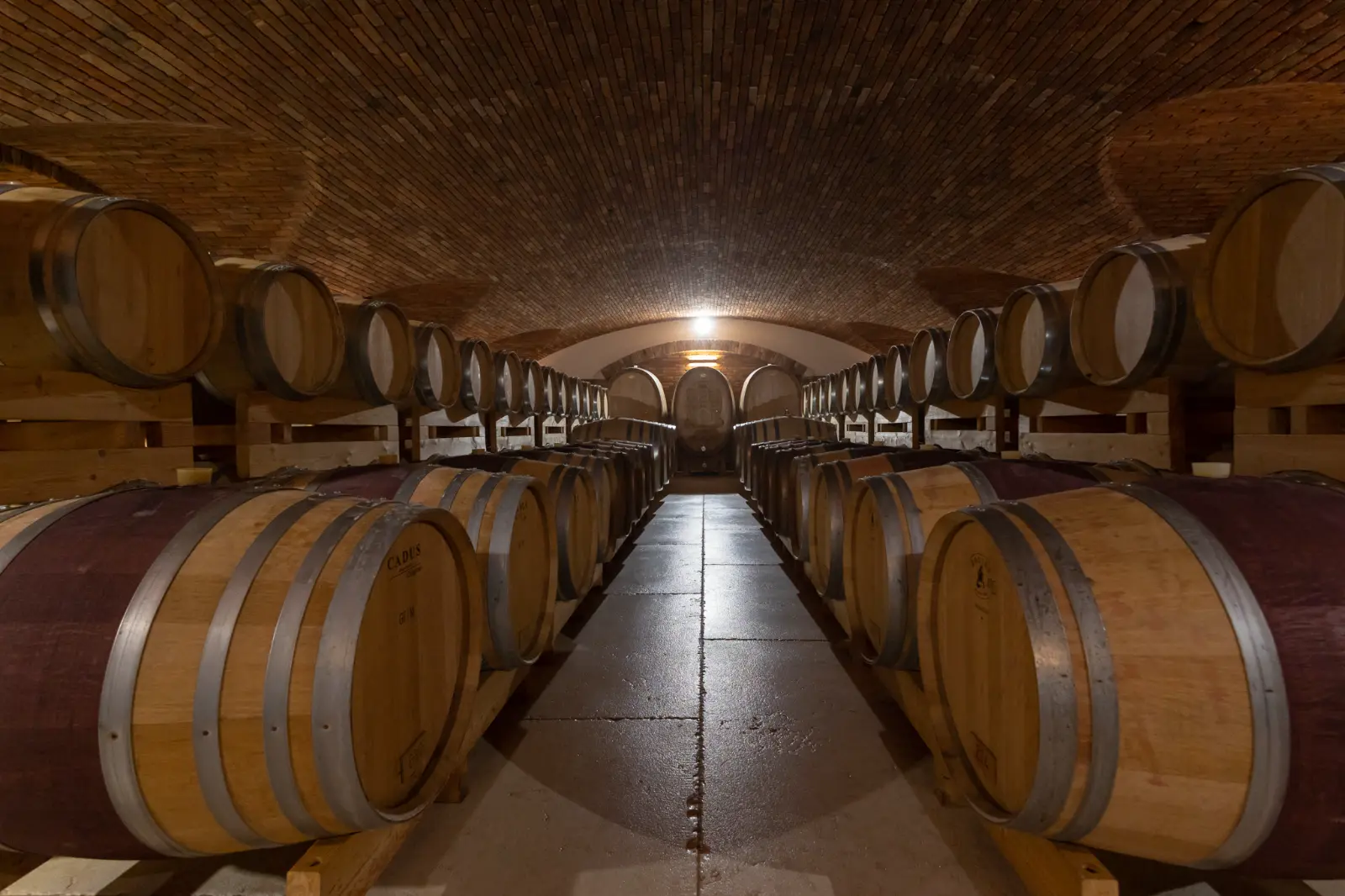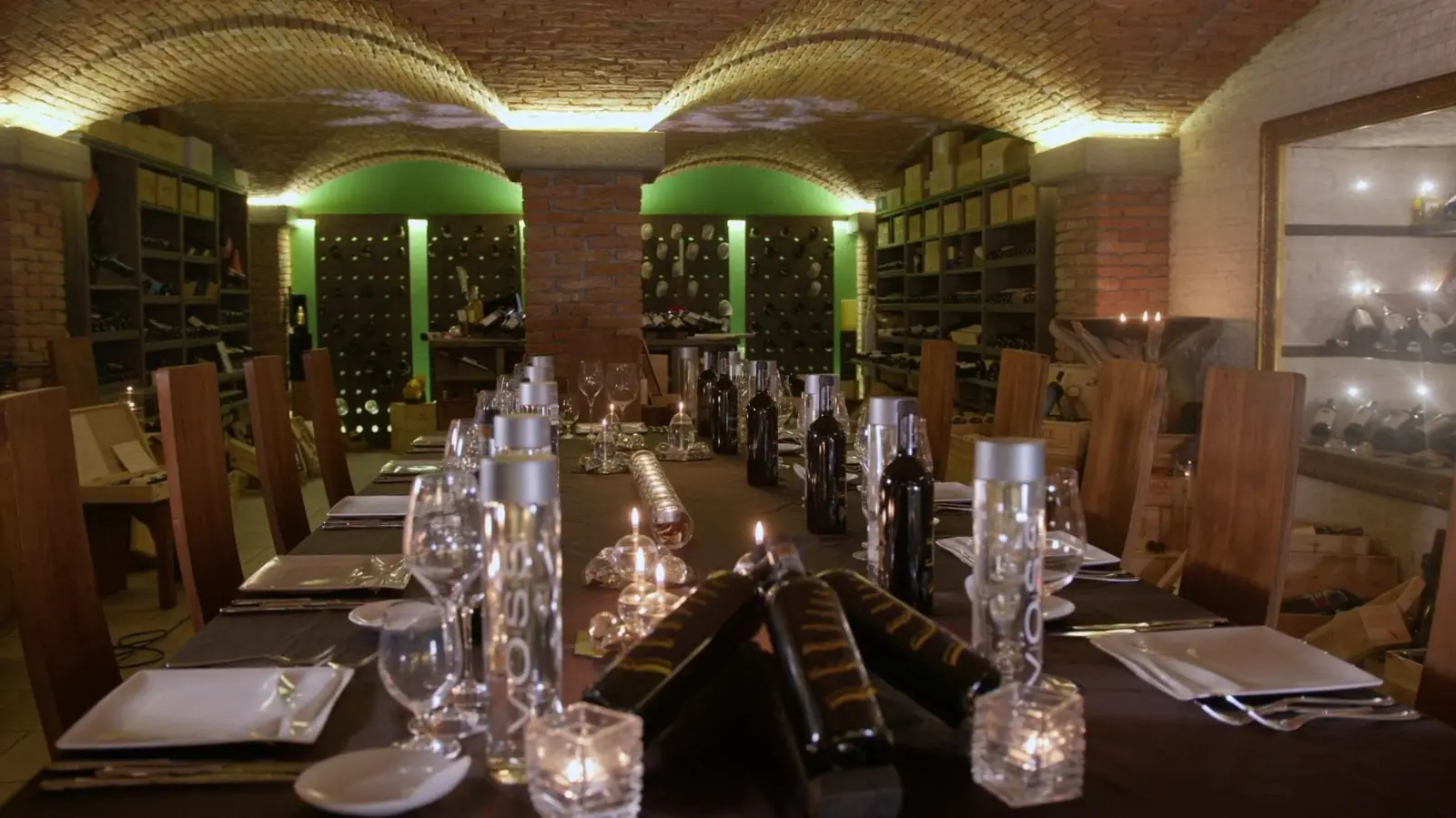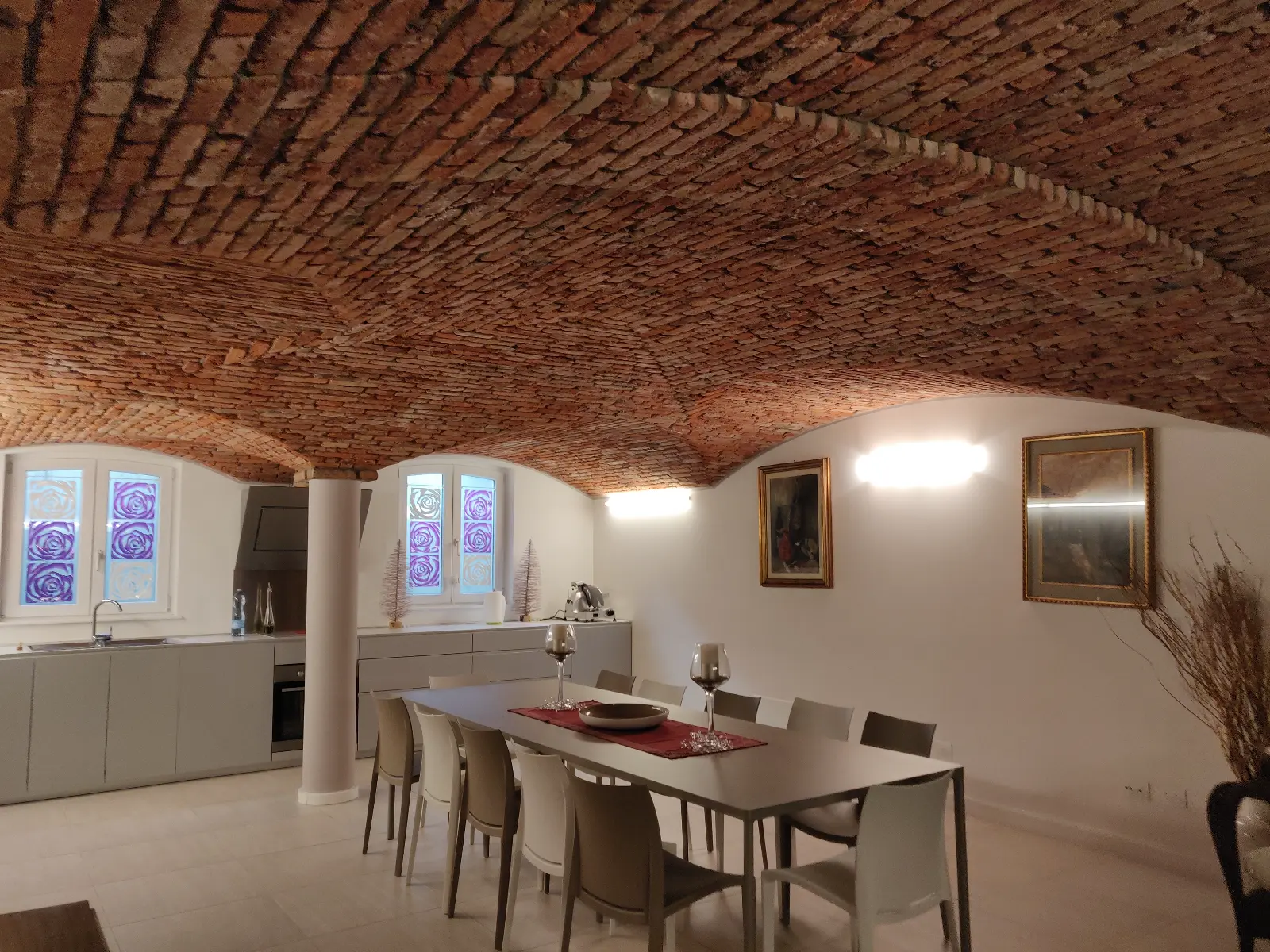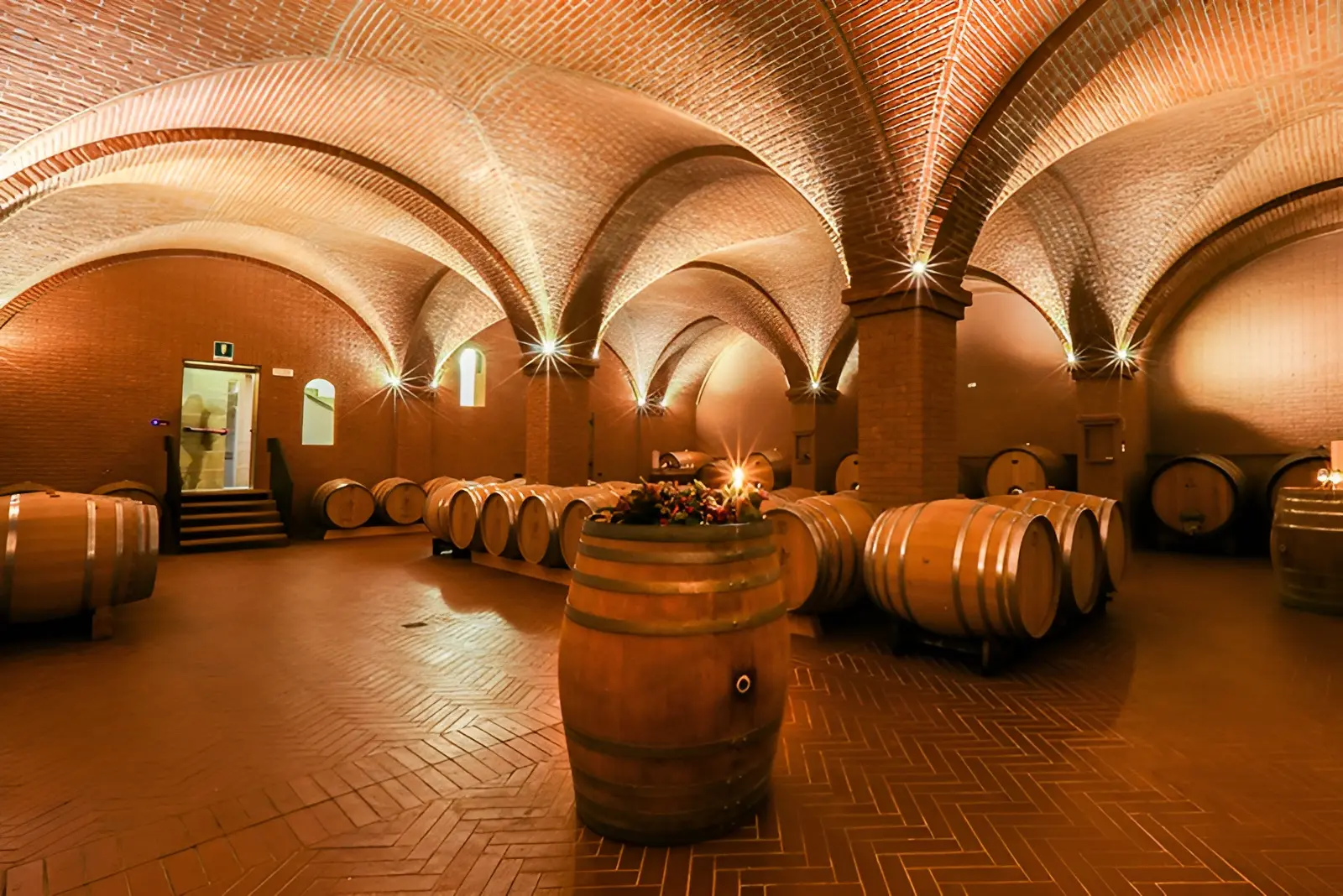
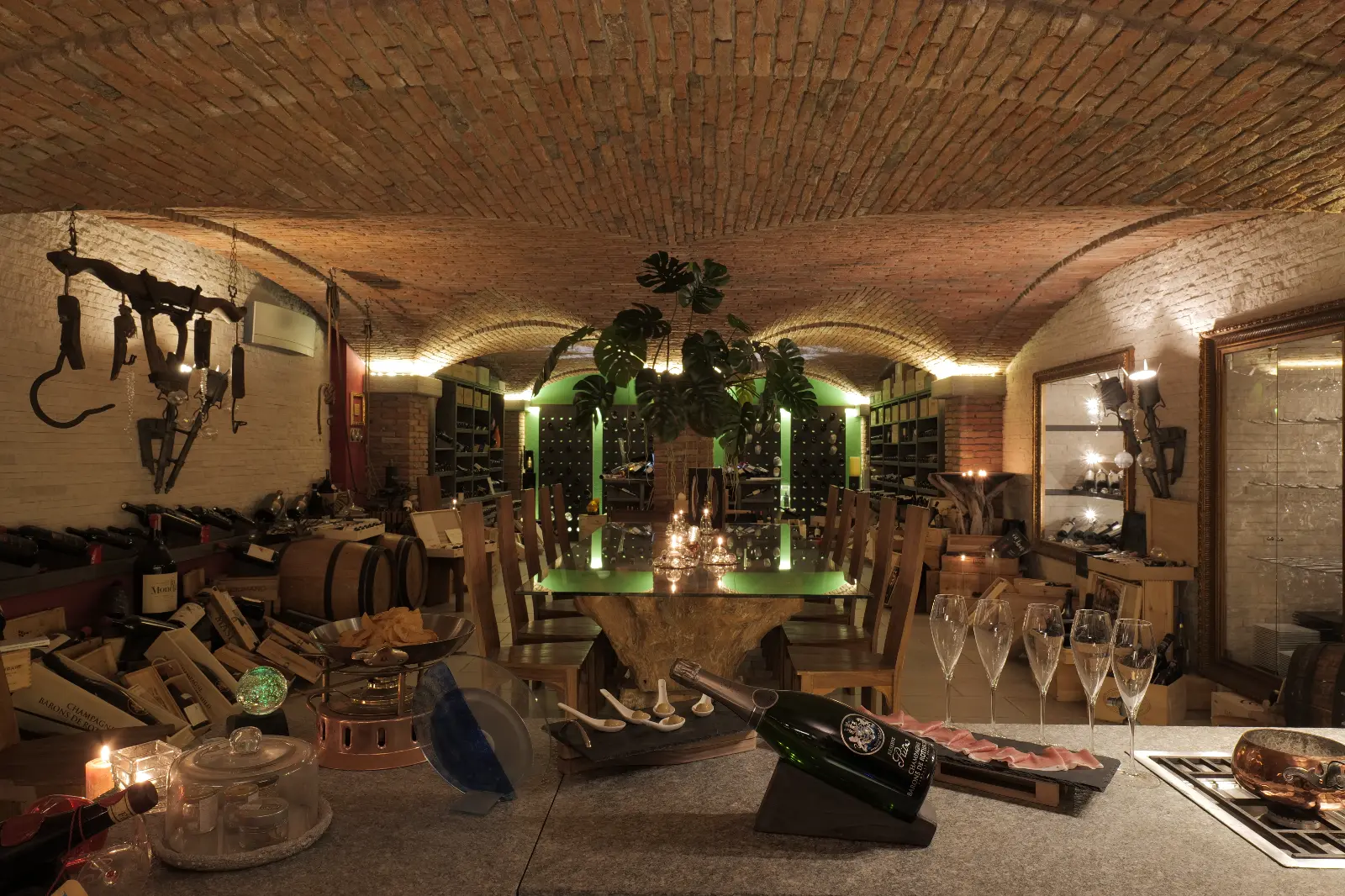
Ask a serious collector which is the most personal room in the house, and the answer is rarely upstairs. It is the cellar: the room that holds what took years to find, what will be opened in twenty years' time, and what gets poured when the people who matter are around the table.
The wine rooms that stay with you all share one quality — they feel as if they have always been there. That feeling cannot be bought off the shelf, but it can be built. Brick reclaimed from centuries-old estates lets a new cellar begin its life already old, full of texture, tone and story, while still meeting modern standards for structure, moisture and temperature.
This guide walks through the ten choices that make an old-world wine room look right, perform beautifully and stay that way for decades — from the character of the material to the geometry of the ceiling, down to space, storage and budget. Every photograph shows a real project, not a rendering.
What Makes a Wine Room Feel Truly Old World?
Step into a genuinely old cellar — beneath a Tuscan farmhouse, a Piedmont estate, one of the great caves of Burgundy — and you recognise it before you can explain it. Nothing is flat and nothing repeats. Light lands on surfaces that curve and vary, the air is cool and still, and the room feels grown rather than built.
In masonry terms, that impression comes from a handful of unmistakable cues:
- Bricks with softened corners, small chips and kiln marks — the record of a life already lived.
- Warm tones mingling in the same wall: reds, oranges, browns, the occasional darker piece.
- Arches, niches and deep reveals where a modern room would offer flat drywall.
- And overhead, a low masonry vault in place of a painted ceiling.
That is the vocabulary of the old world. The rest of this article is about how to speak it fluently — starting with the material itself.
Why Antique Bricks Make a Better Cellar
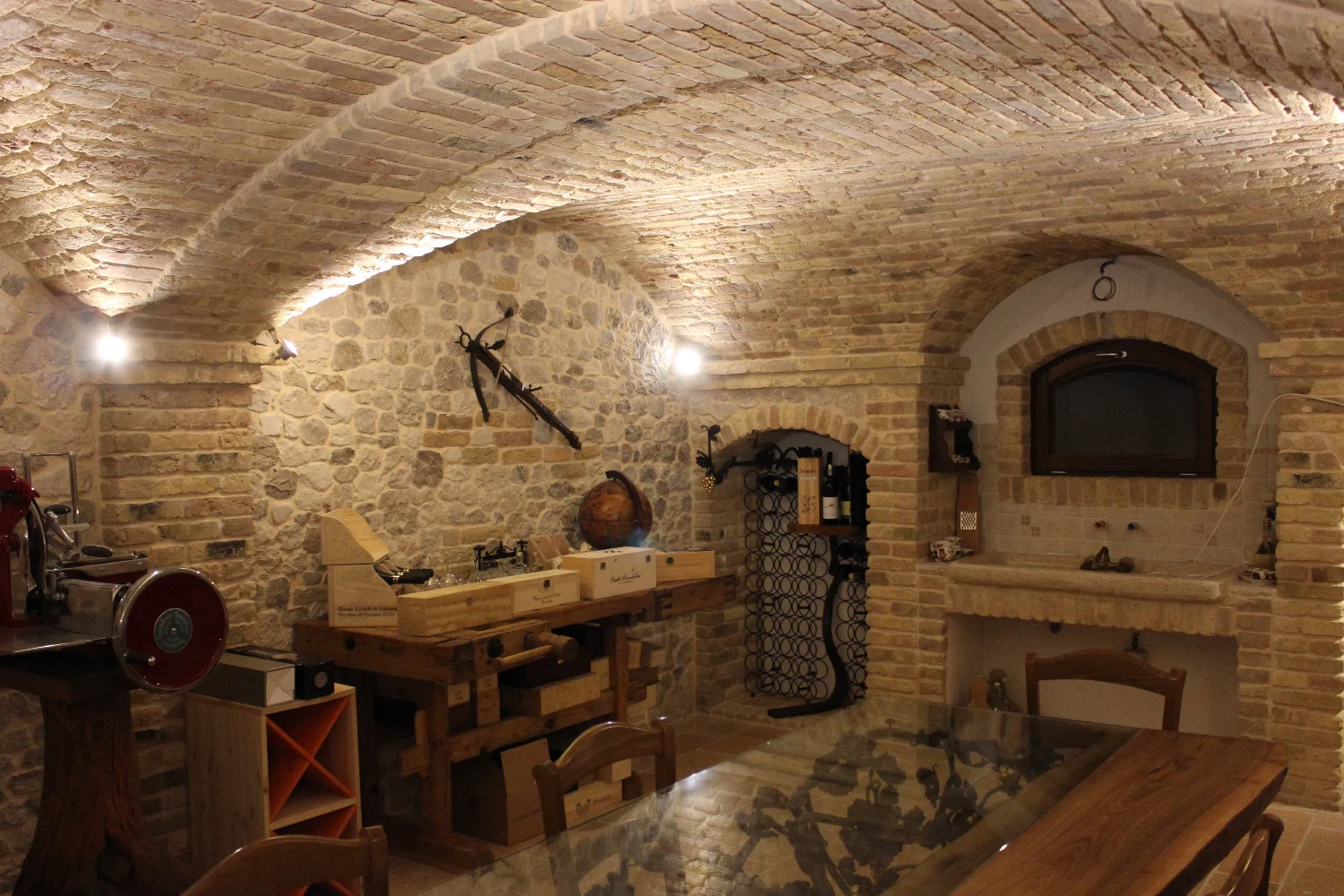
There is a reason the most convincing old-world cellars are built from genuinely old material. A brick fired in an 18th- or 19th-century kiln carries what no factory finish can reproduce: generations of sun, frost, smoke and touch pressed into its surface. Reclaimed from historic farmhouses and country estates, each piece arrives with its own tone, its own temperament — and a service record. It has already stood in a wall for a century or more, through freeze and thaw. You are not guessing how it will age; it already has, beautifully.
Compare that with "aged-effect" bricks or glued veneer panels. They imitate the look from across the room, but a cellar is experienced up close, glass in hand — and up close, a printed pattern always betrays itself through repetition. Genuine reclaimed brick never repeats. A wall of it, or better an entire vault, wraps your collection in the same continuity of time you look for in the bottles themselves.
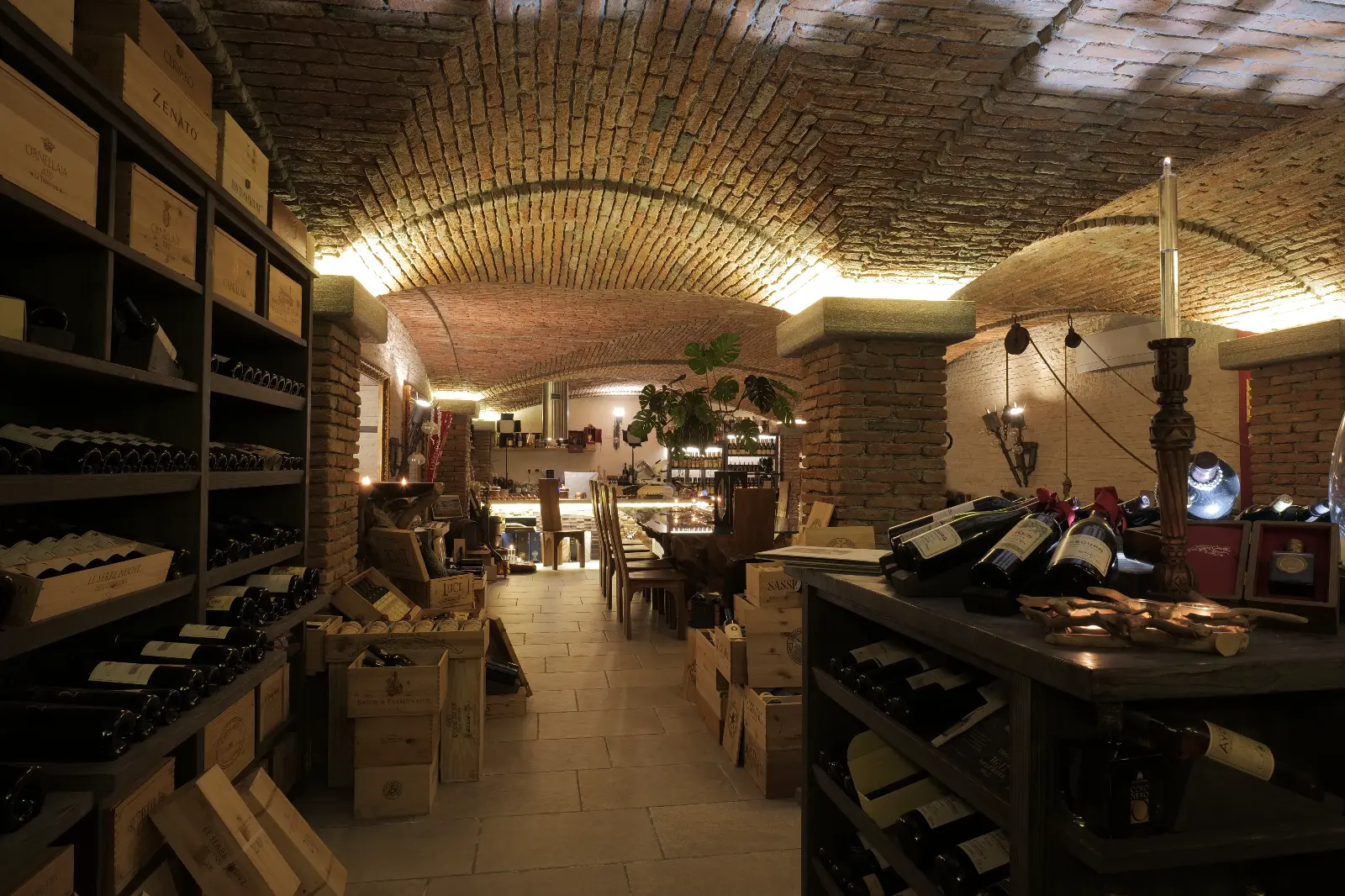
Vintage Look, Modern Performance
Romance aside, a wine room has one non-negotiable job: protecting what is inside it. Here the old materials prove quietly superior. The mass of solid masonry behaves like a thermal flywheel — it absorbs heat slowly and releases it slowly, flattening the daily swings that tire a wine. Terracotta breathes, buffering humidity naturally: dry enough to protect the labels, moist enough to keep corks supple. Even the acoustics improve, because a curved brick ceiling softens sound instead of bouncing it back.
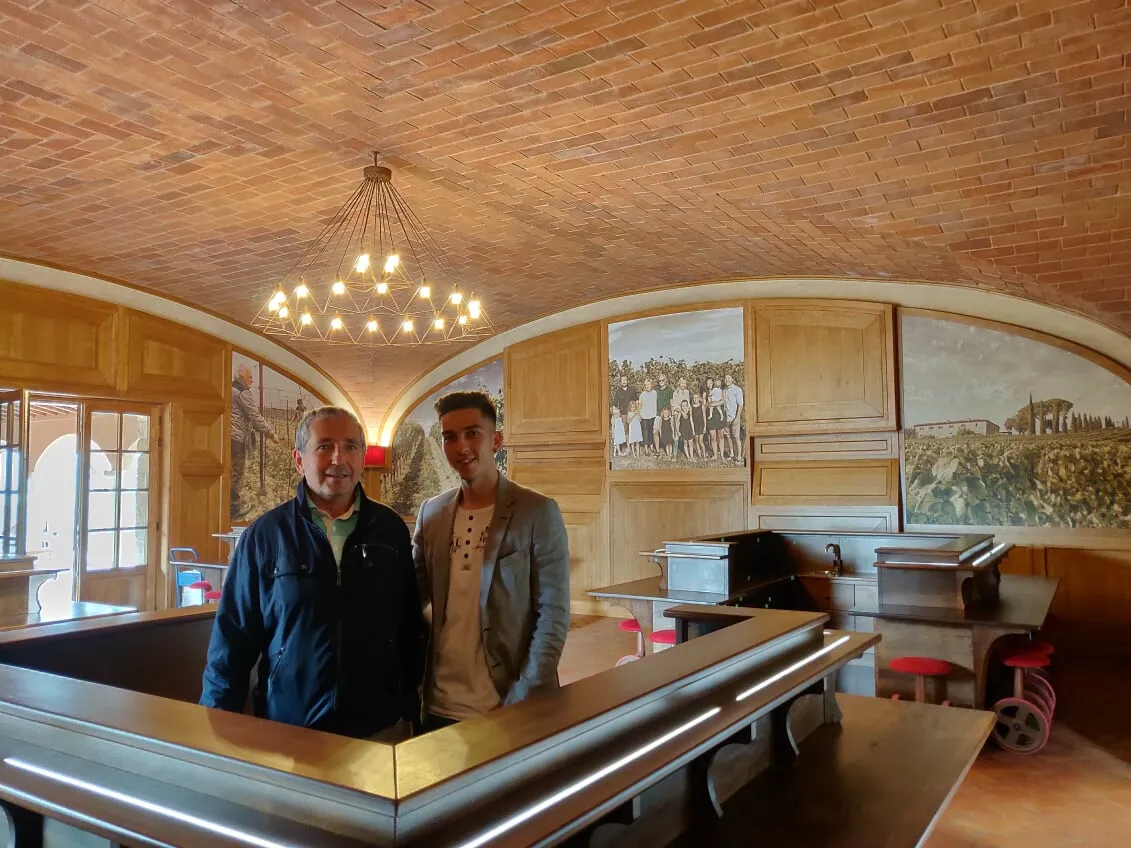
Designed well, a masonry cellar can even run passively. This private cellar in Appiano Gentile, built more than a decade ago six metres below a garden, is cooled and ventilated purely by natural draft through two chimney stacks. Eleven years on: constant temperature and humidity, no mould, no maintenance — and no machines.
"Today the cellar is exactly eleven years old, and thanks to this natural ventilation system I have never had problems with mould, infiltrations, or bad odours. If you ask me for a negative side, I wouldn't be able to find one."
Where Brick Belongs: Walls, Arches, Columns
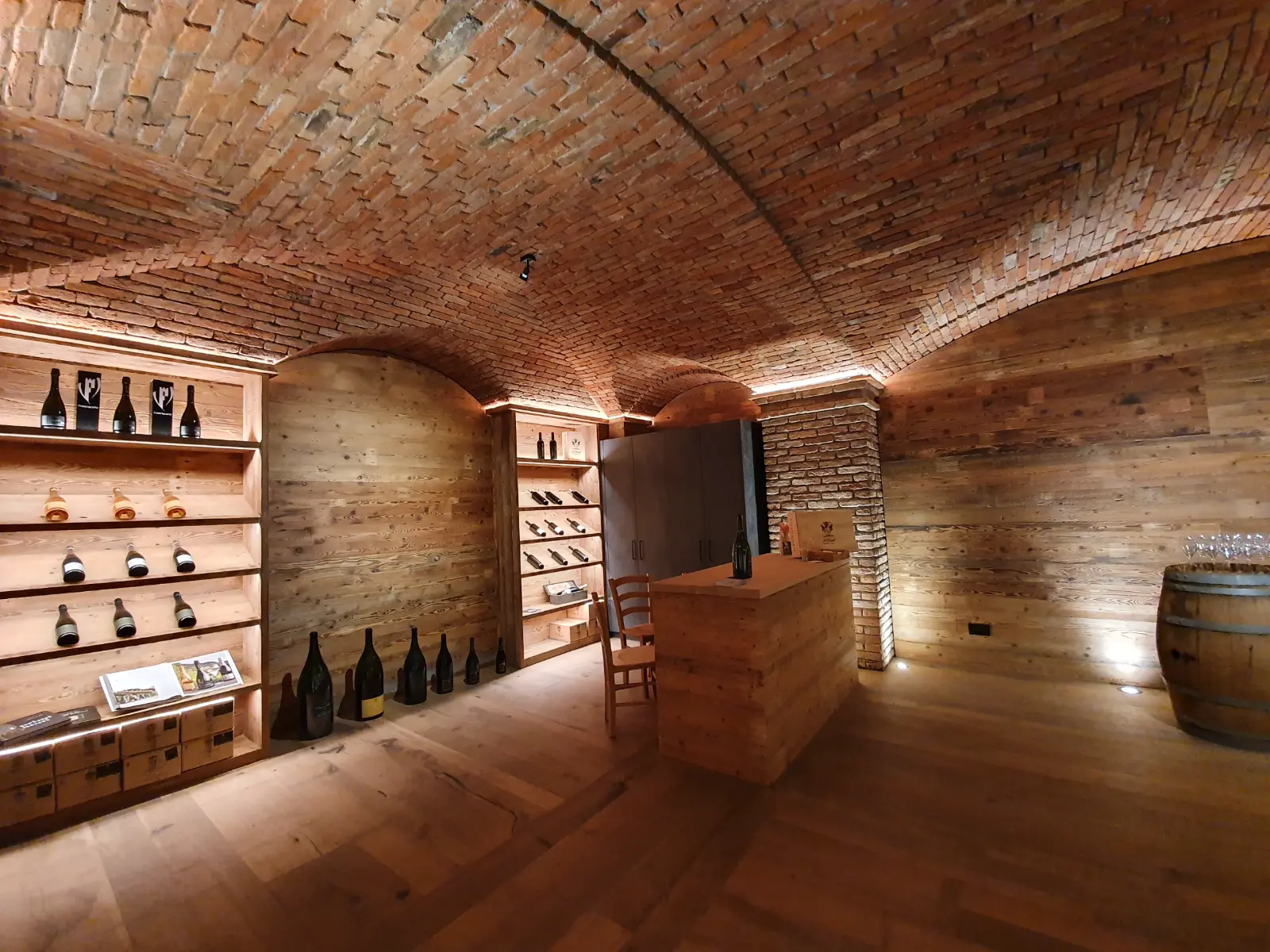
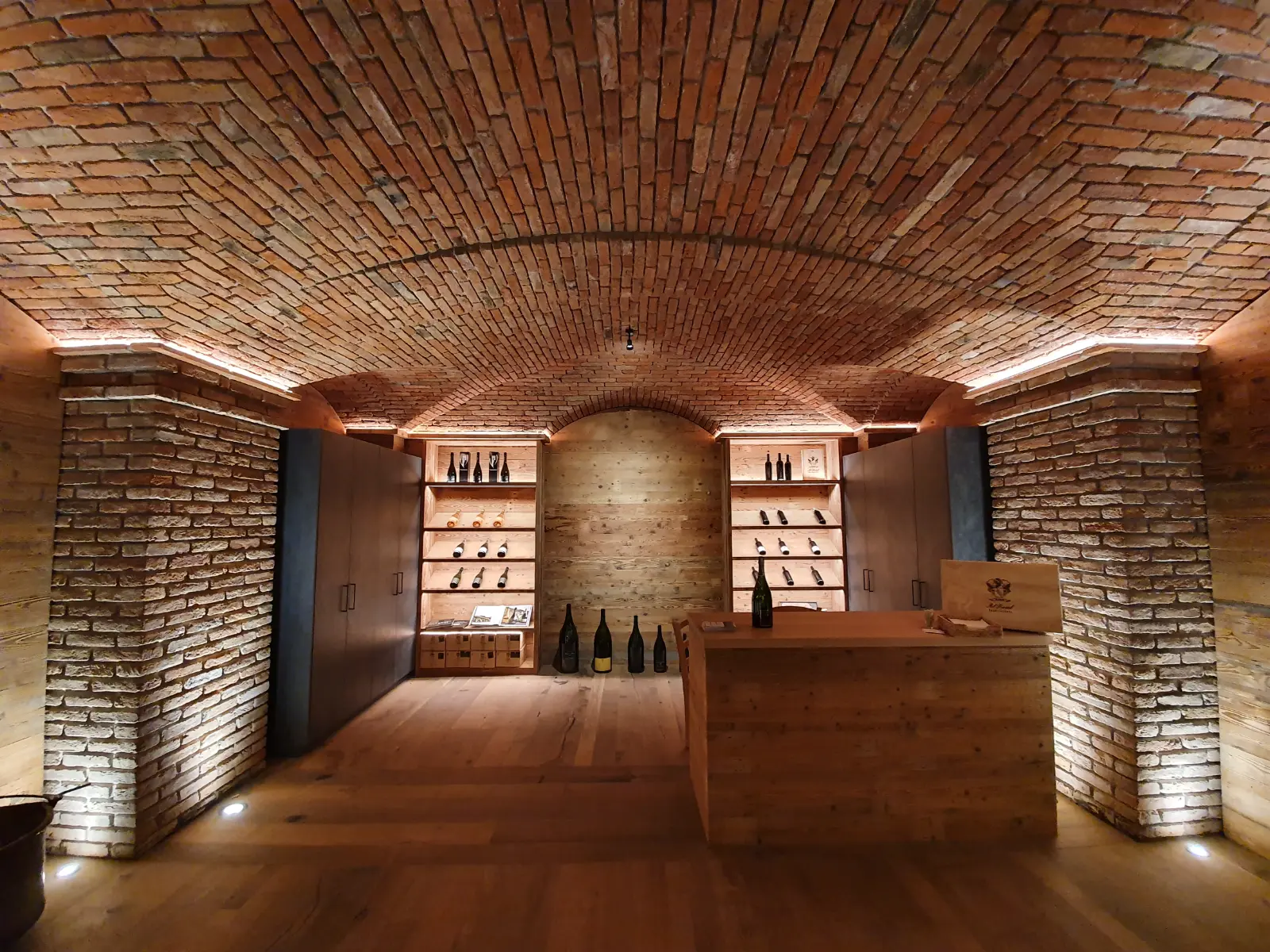
A wine room does not need reclaimed brick on every surface to feel authentic — character concentrates. Lining the whole room creates the true masonry-cave effect; in smaller spaces, a single feature wall behind the bottle display can carry the atmosphere on its own. Arched doorways and brick-framed niches announce that you are entering somewhere different, while columns give a large cellar rhythm — and give your most important bottles a stage.
The principle is simple: put the brick where the eye rests and the hand touches. And then raise your gaze to the surface almost everyone forgets, the one architects call the fifth wall — the ceiling. In a cellar, that is where the room is won or lost.
The Vault: One Ceiling That Changes Everything
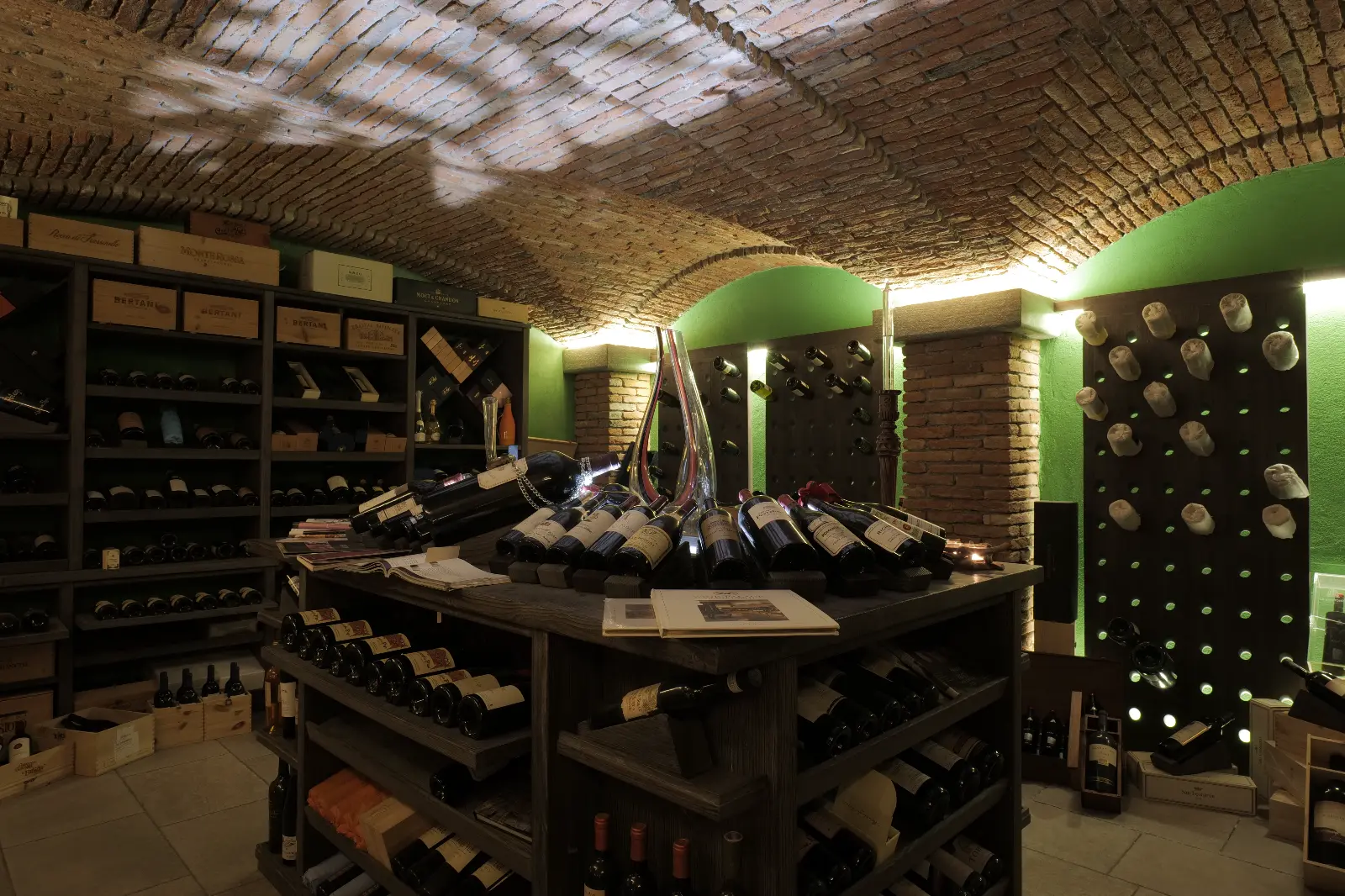
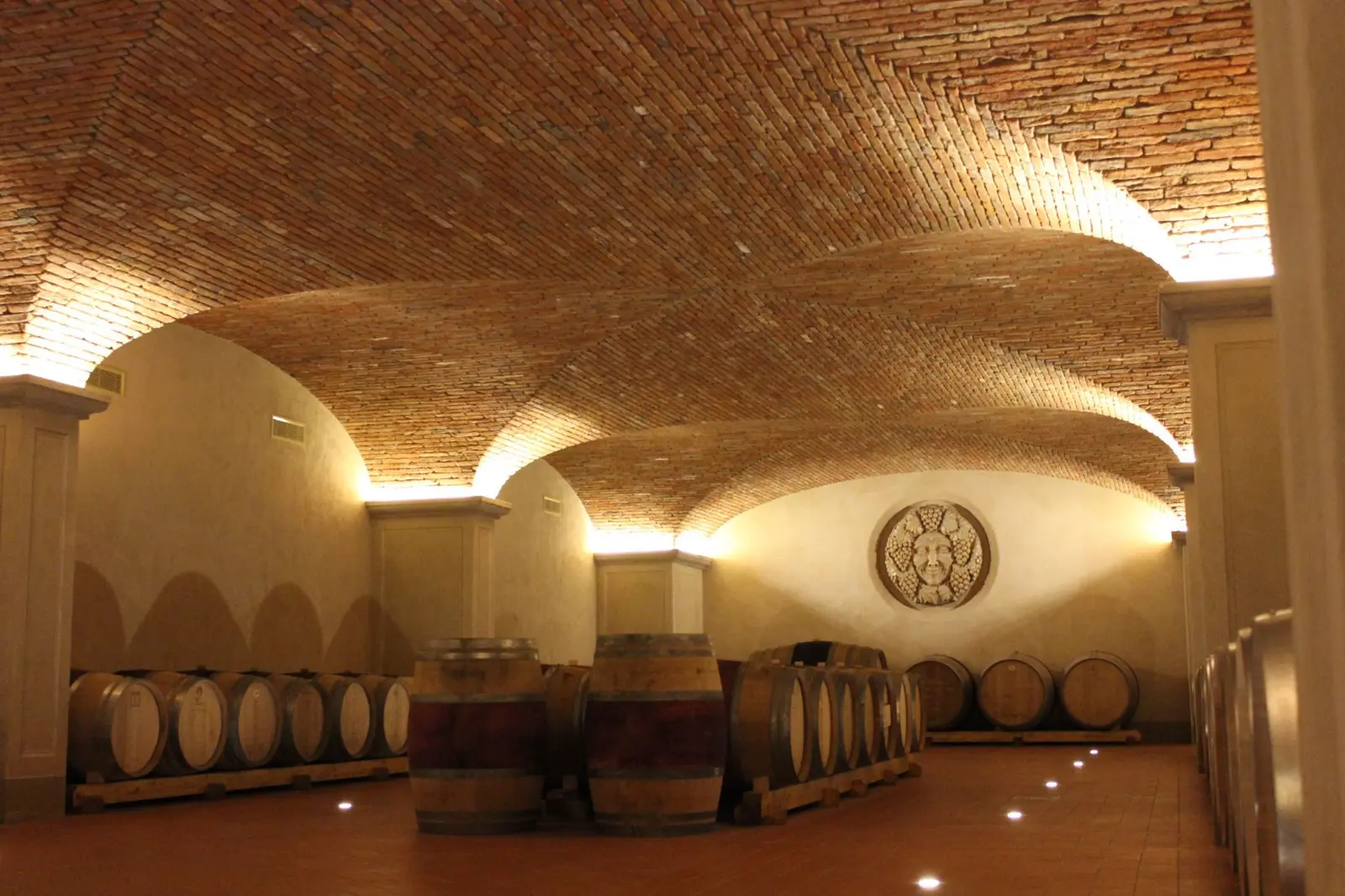
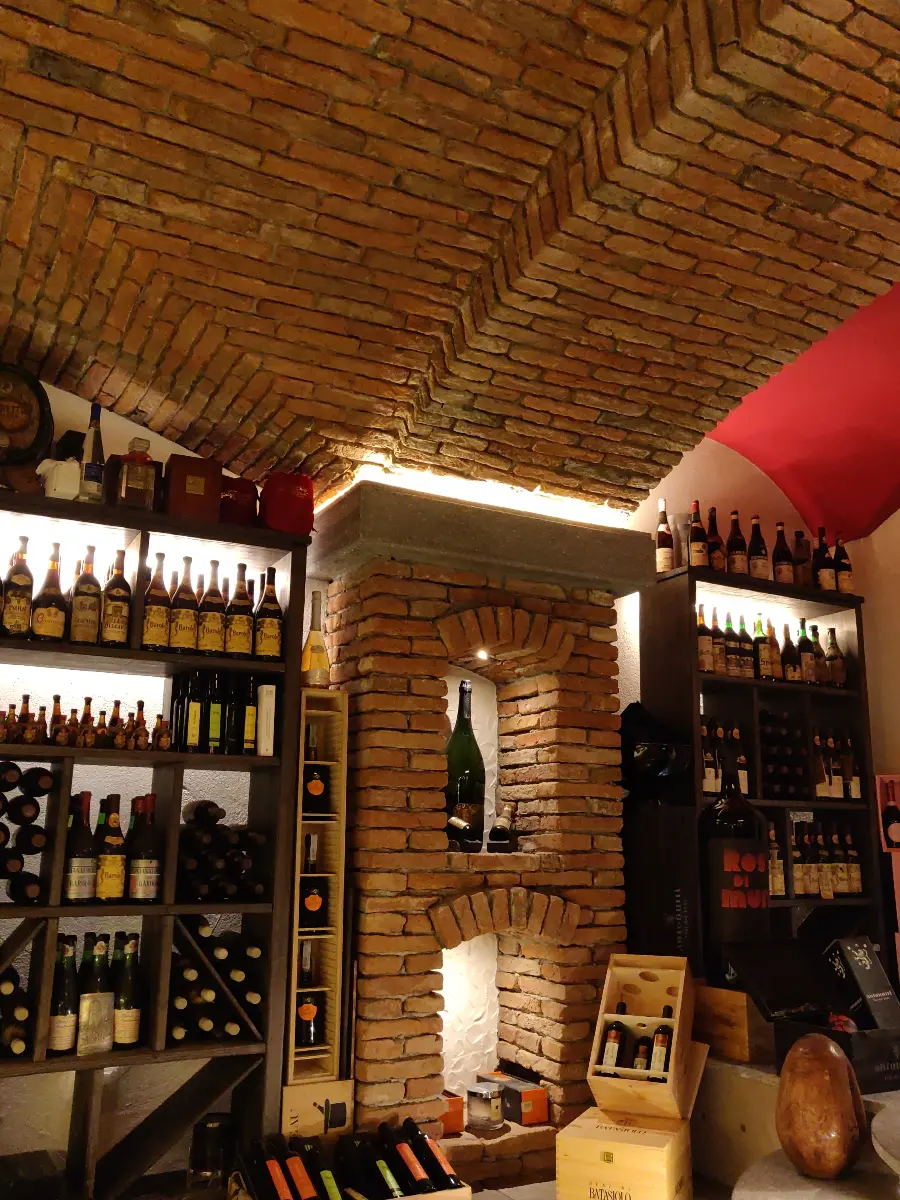
For most of architectural history the vault was not a decorative flourish — it was the only way to hold a house up above a cellar. Brick arches carried the load, resisted fire, and their mass kept the rooms beneath naturally cool, which is exactly why Europe's estates aged their wine under vaults for centuries. Then steel and concrete arrived, and the flat ceiling took over.
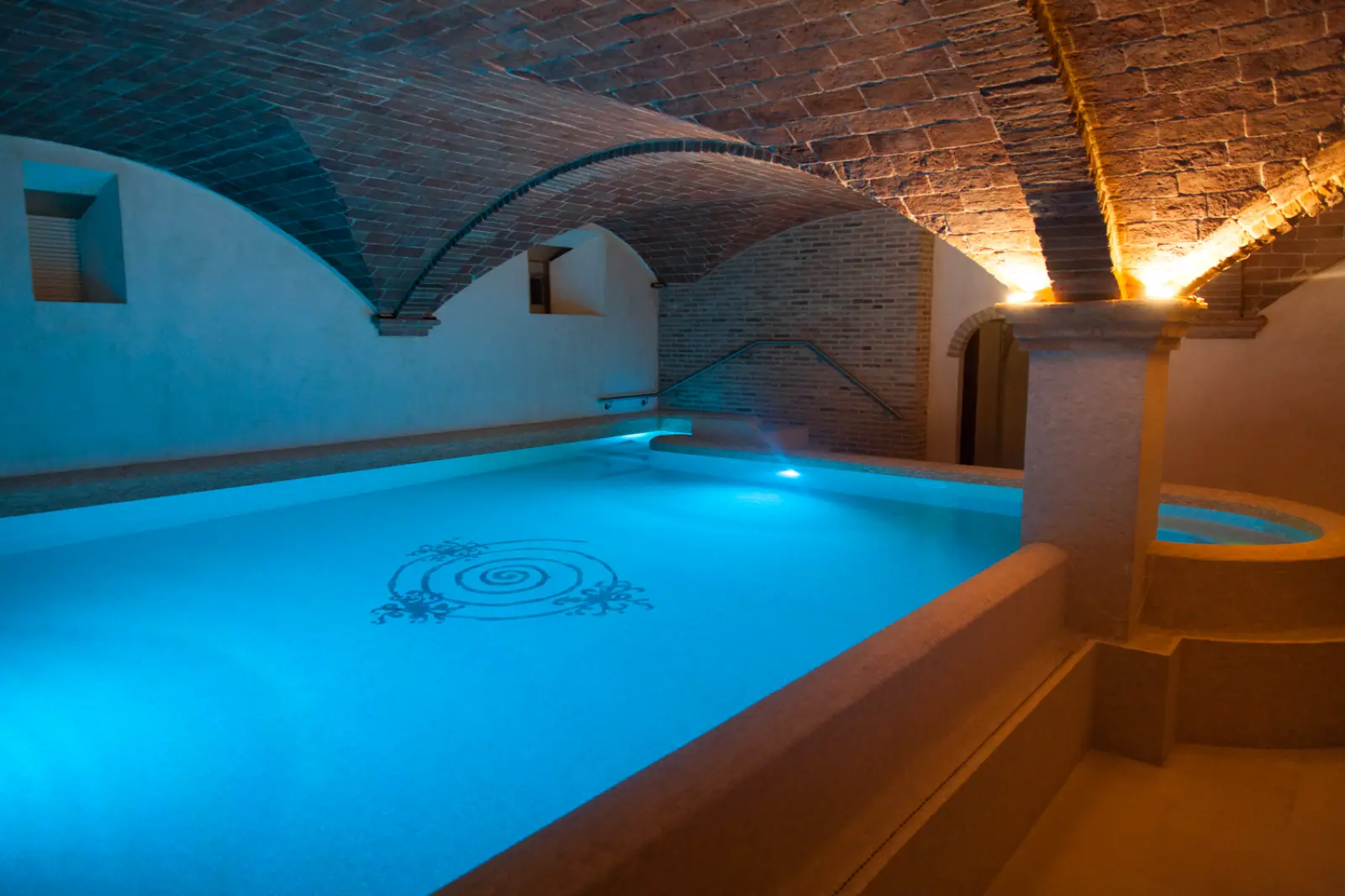
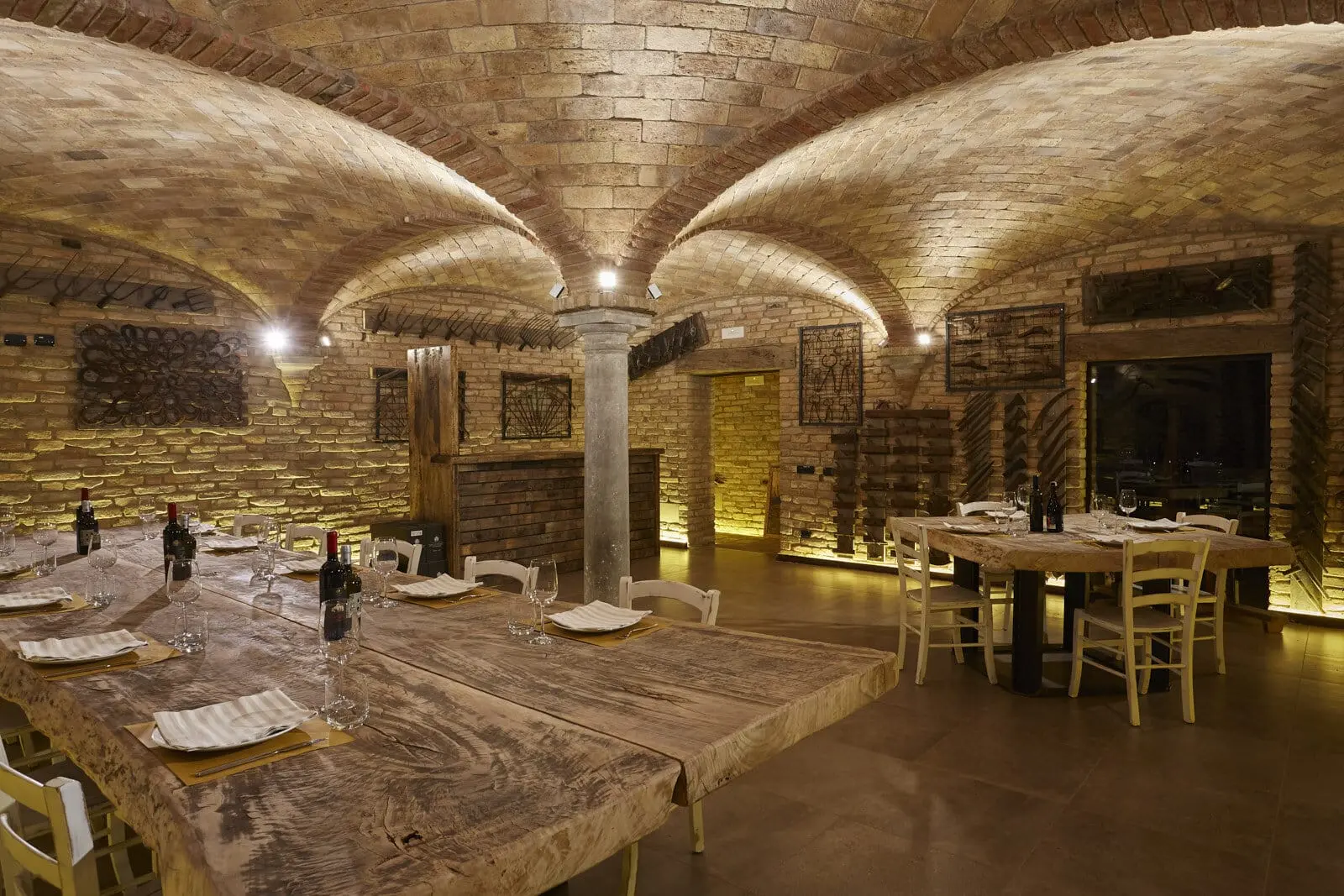
Build a vault today and you recover everything the flat ceiling gave up. The curve pulls the eye upward and makes even a modest basement feel taller and more generous than its measurements. Barrel, cross or sail — the geometry ties the room to a thousand years of building tradition. One ceiling, and the space stops being a basement and becomes architecture.
Old-World Shell, Contemporary Soul
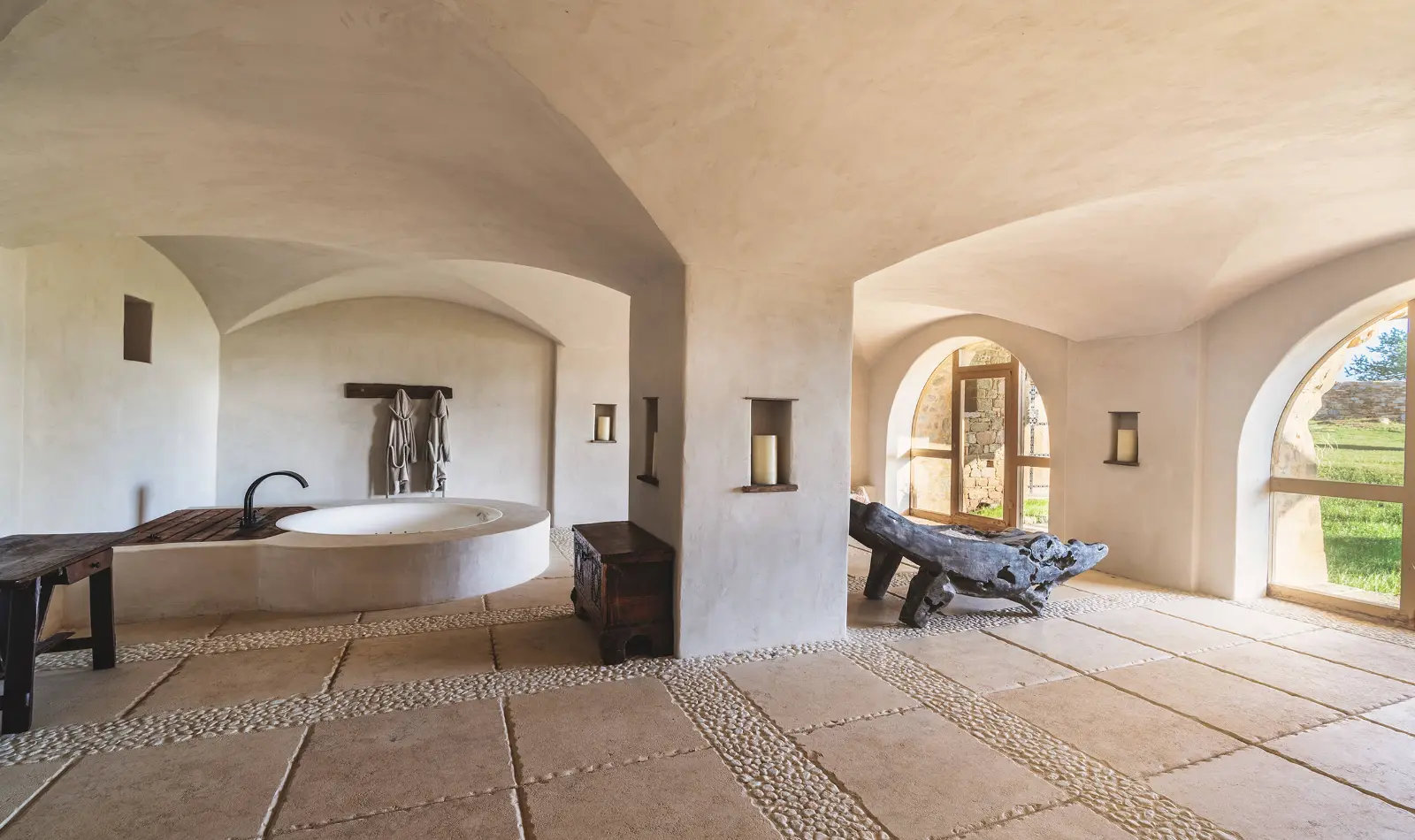
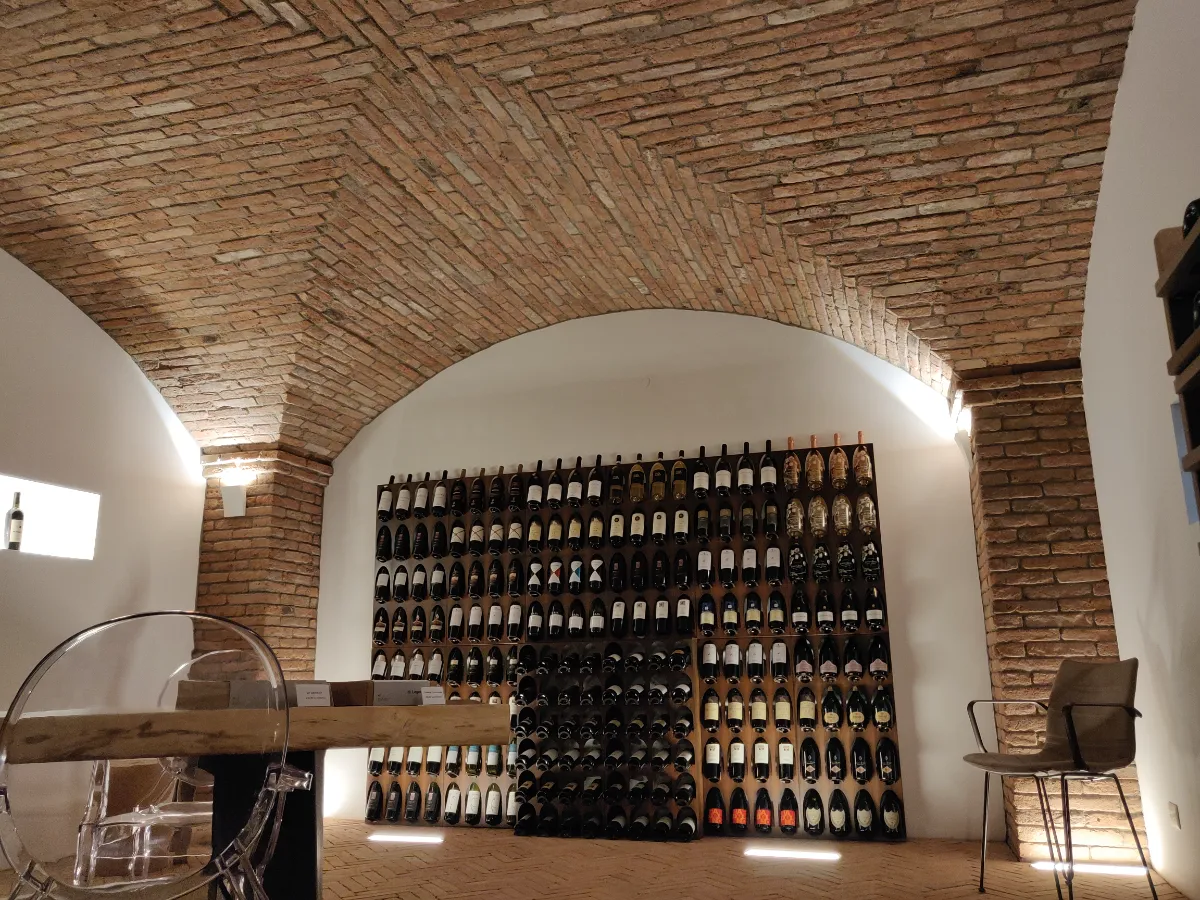
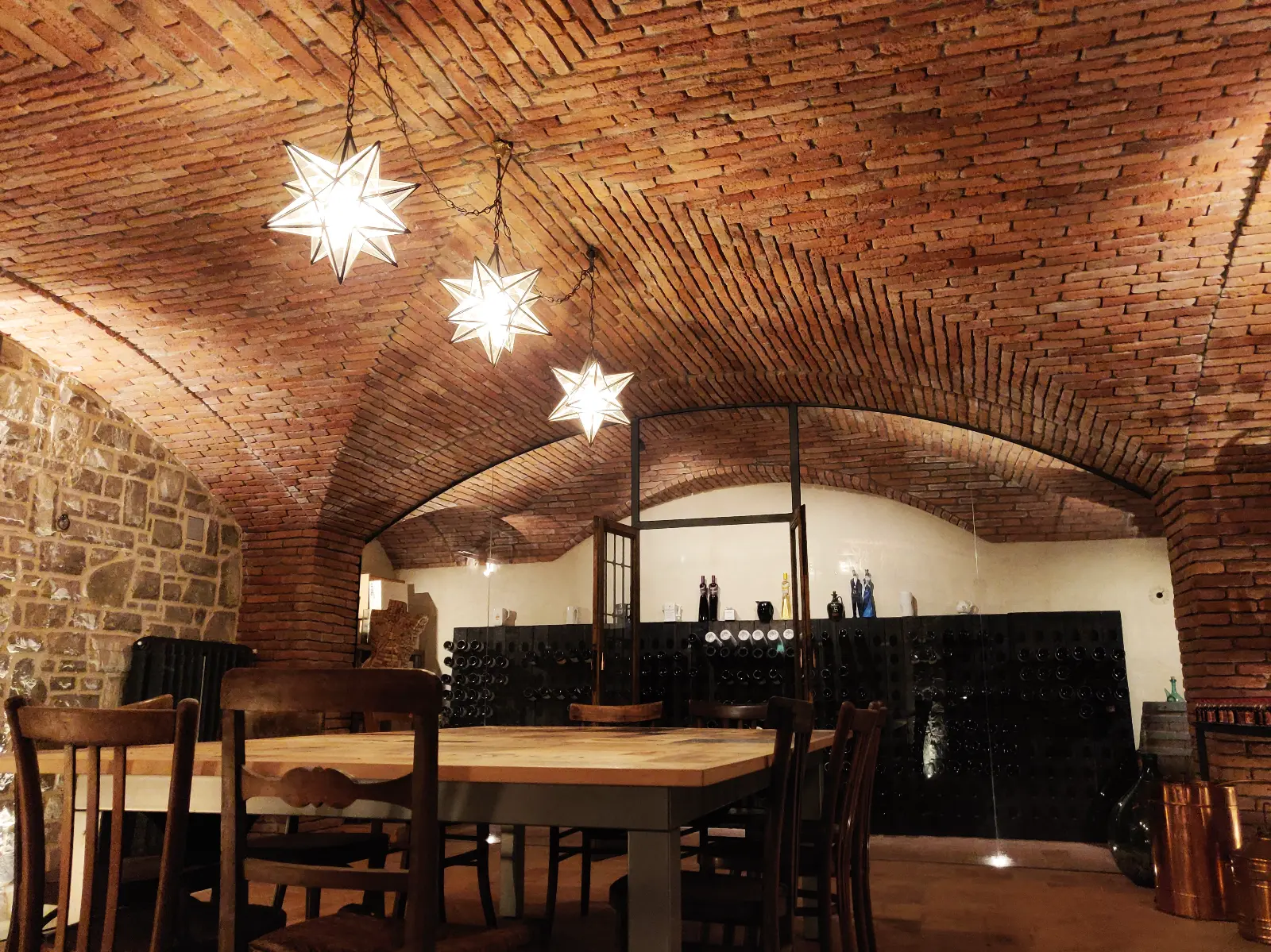
A common misconception is that a brick vault commits you to rustic furniture and wrought iron. The most striking wine rooms being designed today do precisely the opposite: clean-lined glass partitions, minimal metal racking, a slab of pale stone for tasting — set beneath a hand-laid antique vault. The contrast is the point. The ceiling brings warmth, texture and history; the furnishing brings clarity and calm.
Architects and interior designers keep returning to this pairing because it works in both directions: it keeps a period property honest, and it gives a modern home the one thing that cannot be specified from a catalogue — age.

A Cellar That Gathers People
Anyone who owns one will confirm it: the cellar stops being storage the day a table moves in. Dinners migrate downstairs. Guests who were promised "a quick look at the collection" are still there at midnight. Under a vault, a tasting becomes an evening — candlelight travelling along the curve of the brick, the noise of the world left upstairs.
If you love to host, this becomes the room your guests talk about on the way home and remember years later. Few gestures say more about how you receive people than opening something rare beneath a ceiling built the way ceilings were built two hundred years ago.
Space, Height, Storage: A Short Guide
Practical questions decide whether a vision becomes a project, so here are honest answers to the four that matter most. The good news: a vaulted wine room adapts to far more situations than most people assume.
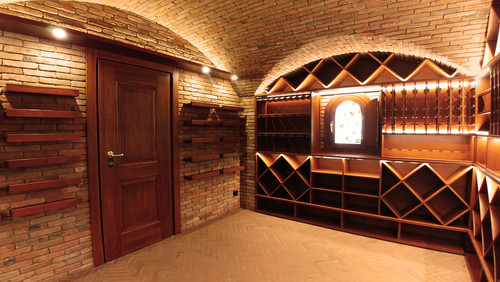
- Space. In a compact, roughly square room, a single cross vault above the racking creates a jewel-box cellar. In a larger basement, a sequence of vaults and arches turns the whole floor into a taverna — cellar, tasting room and dining room in one.
- Ceiling height. The most persistent myth is that vaults demand height. Built by expert hands, a brick vault can take as little as 5 cm of thickness at the crown, its central point; the curve deepens only towards the walls. Height is almost never the obstacle people expect — and because the geometry draws the eye upward, the room ends up feeling taller, not lower.
- Storage. Classic wooden racking remains the natural partner for antique brick, but the shell is neutral: steel, glass-fronted climate cabinets or bespoke joinery all sit comfortably against it.
How to Start Your Own Reclaimed Brick Wine Room
If the first eight points have you looking at your basement differently, this is how a project actually begins — four steps, no commitments, just clarity:
- Define the goal. Display, long-term ageing, a tasting room for entertaining — or all three at once. The answer shapes every choice that follows.
- Measure the space. Footprint, ceiling height and access, noting the room's current condition: basement, under-stair volume, an unused taverna.
- Settle the technical brief. Climate control or passive design, ventilation, cooling and lighting — decided before the first brick, not after.
- Bring in specialists. A vault in genuine reclaimed brick is not general masonry. It calls for a workshop that can source authentic antique material and put it overhead with certainty — a craft very few teams in the world still practise.
Why Choose Pietrantiche
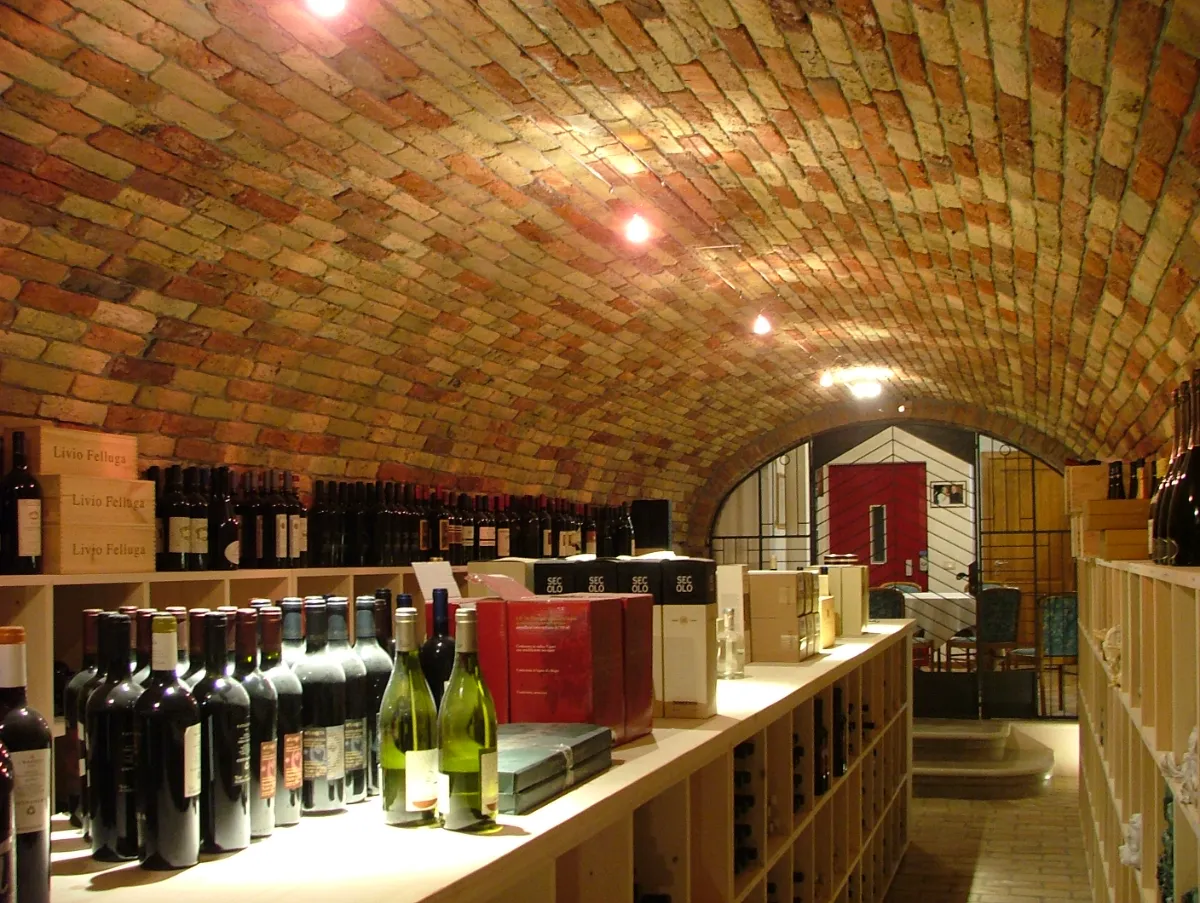
One last thing, in the interest of full transparency: every space pictured in this article — every vault, arch, column and niche — was built by the same hands. They belong to Pietrantiche, the Italian company that architects and estate owners across Europe regard as the reference point for masonry architecture and handmade vaulted ceilings.
If you decide your wine room deserves a real vault rather than an imitation, this is what sets them apart:
- Decades of experience. Pietrantiche is a family-run company where the craft is handed down from father to son, with vaulted spaces built for private villas, historic estates and celebrated wineries in Italy and around the world.
- A method that exists nowhere else. Using exclusively antique bricks reclaimed from 18th- and 19th-century Italian farmhouses and estates, every vault is laid by hand in their workshop as prefabricated sections, then assembled on site with millimetric precision — needing as little as 5 cm at the crown, without turning your home into a building site.
- Total customisation. Geometry, brick blend, lighting: every detail is designed around your room, with realistic 3D renders that let you walk through your cellar before a single brick is laid.
As point nine made clear, this is not work to entrust to improvisation. If you would rather skip the search and speak directly with the people who built everything you have just seen, you can reach the Pietrantiche team here.