
Ask anyone which room their home truly lives in, and nobody hesitates. It is the kitchen: where mornings begin, where guests gather no matter how comfortable the sofa is, and where the meals that mark a family's life are cooked, eaten and talked over until late.
Yet the kitchens people cross the world to photograph — the farmhouse kitchens of Tuscany, all warm brick and low vaults and light that seems poured rather than switched on — share a quality most modern kitchens have lost: they feel as if they have always been there. That feeling cannot be ordered from a catalogue, but it can be built. Antique bricks reclaimed from 18th- and 19th-century Italian estates let a brand-new kitchen begin its life already old, full of texture, tone and story, while cooking, ventilating and performing like a thoroughly modern one.
This guide walks through the ten choices that make an exposed brick kitchen with a vaulted ceiling look right, live well and stay beautiful for decades — from the character of the material to the geometry overhead, down to space, height and light. Every photograph shows a real project, not a rendering.
What Makes a Kitchen Truly Tuscan?
Step into an authentic Tuscan farmhouse kitchen — the kind hidden in the hills between Siena and Volterra — and you recognise it before you can explain it. Nothing is flat and nothing repeats. Light moves across surfaces that curve and vary, materials show their age without apology, and the room feels grown rather than fitted.
Strip the style down to its bones and a handful of unmistakable cues remain:
- Exposed brick with softened corners, small chips and kiln marks — the record of a life already lived.
- Warm tones mingling in the same surface: reds, oranges, ochres, the occasional darker piece.
- Honest companions: natural stone, aged wood, terracotta floors.
- And overhead, in place of a painted ceiling, a low brick vault.
Everything else — the linen, the copper pans, the bowl of lemons — is decoration. Those four elements are the architecture. The rest of this article is about getting them right, starting with the one people get wrong most often: the brick itself.
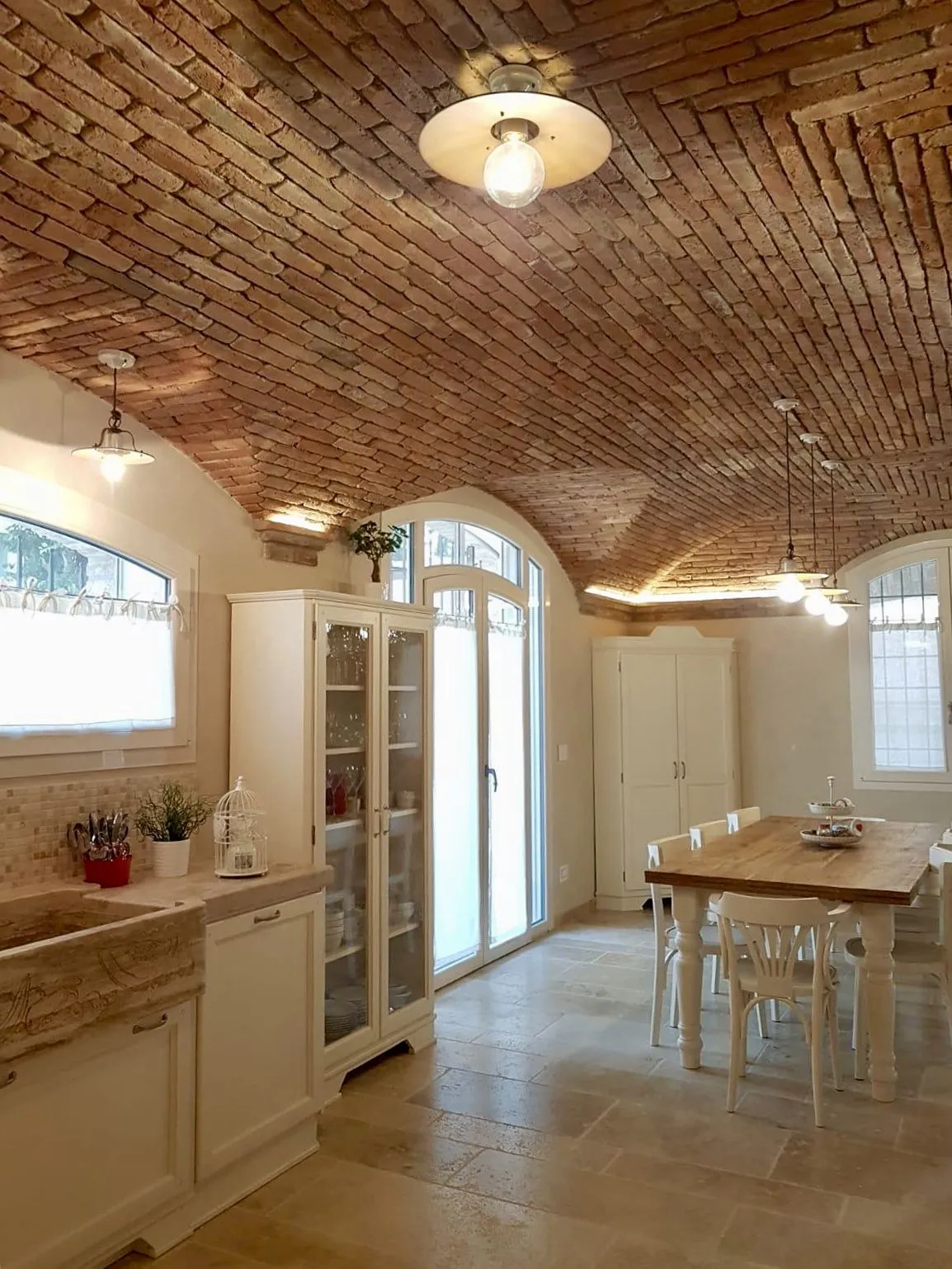
Real Antique Brick, Not a Printed Imitation
Here is the difference between a kitchen that photographs well and a kitchen that feels extraordinary to stand in. A brick fired in an 18th- or 19th-century kiln carries what no factory finish can reproduce: generations of sun, frost, smoke and touch pressed into its surface. Reclaimed from historic Italian farmhouses and estates, each piece arrives with its own tone, its own temperament — and a service record. It has already stood in a wall for a century or more. You are not guessing how it will age; it already has, beautifully.
Now compare that with "aged-effect" brick slips and glued veneer panels. They imitate the look from across a showroom, but the kitchen is the one room you experience at arm's length, every single day — chopping, stirring, leaning against the island with a coffee. Up close, a printed pattern always betrays itself through repetition. Genuine reclaimed brick never repeats. You choose real ingredients over imitations every time you cook; the room around you deserves the same standard.
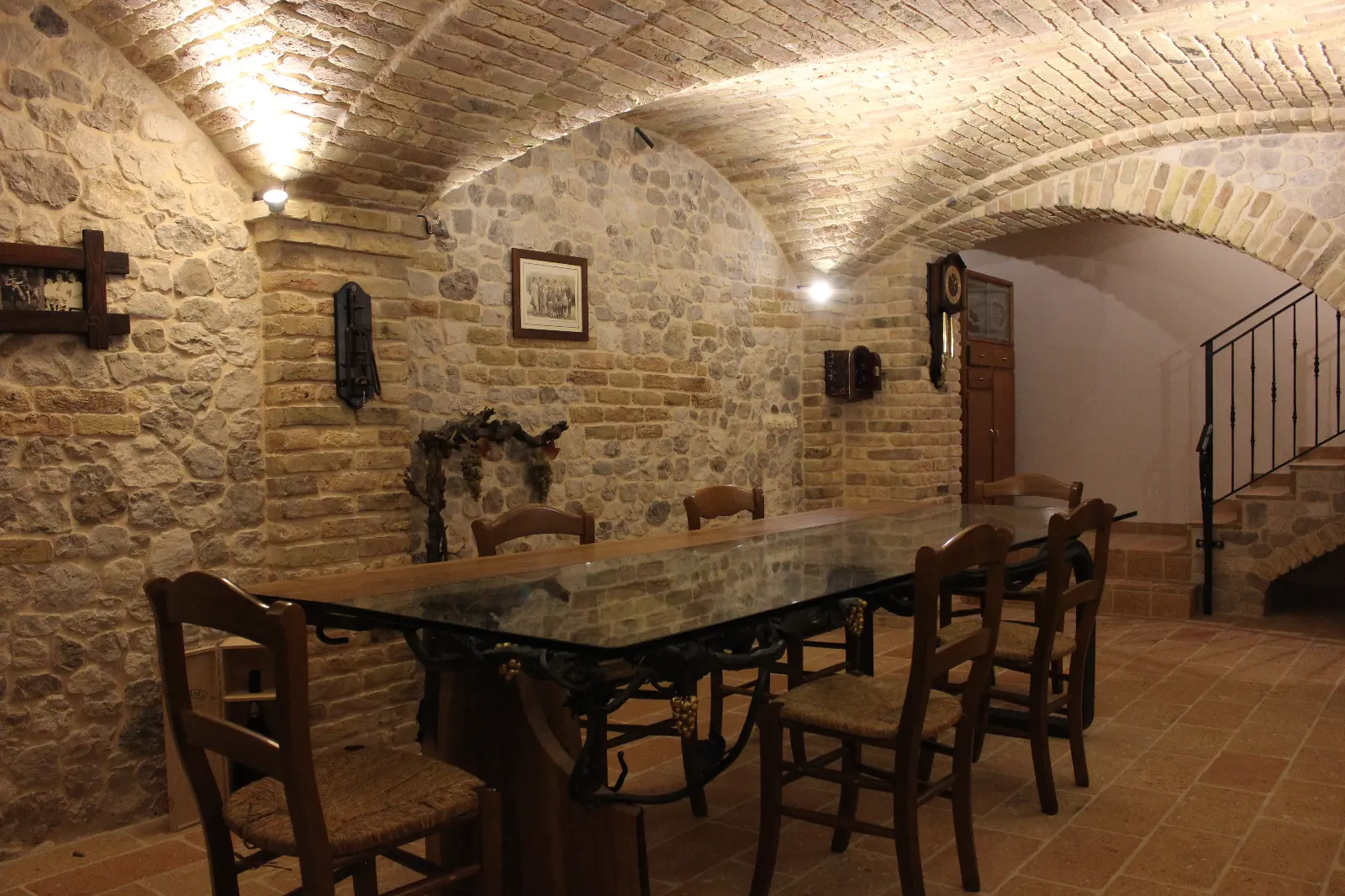
The Vaulted Ceiling: Your Kitchen's Fifth Wall
In a kitchen, the walls are already spoken for. Cabinetry, appliances, splashbacks and shelving claim every vertical surface — which is why two expensive kitchens so often differ only in their door fronts. The one surface that remains gloriously free is the one architects call the fifth wall: the ceiling. In most homes it is a blank sheet of painted plasterboard. In the great kitchens of Italy, it is the room's crowning feature.
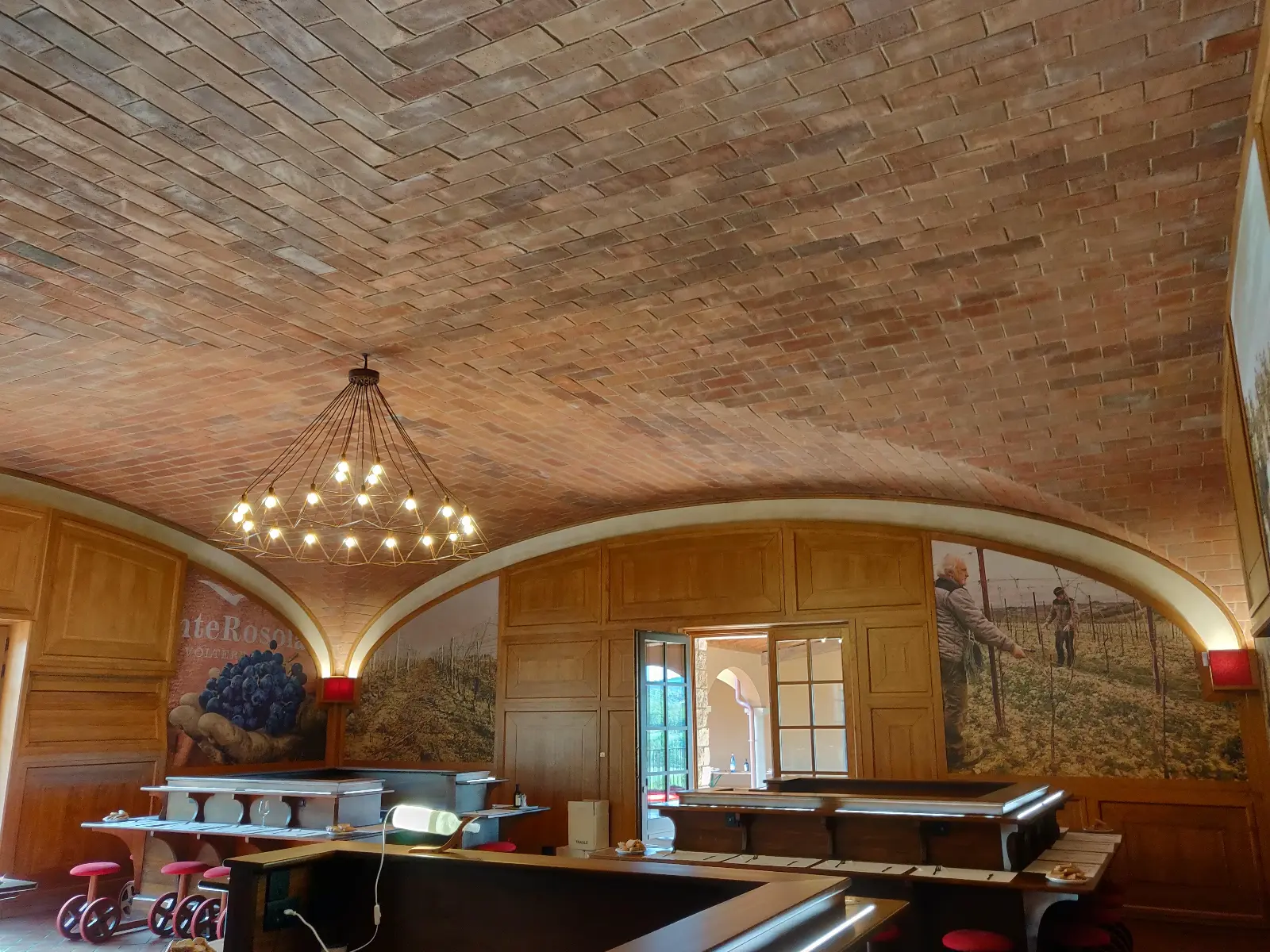
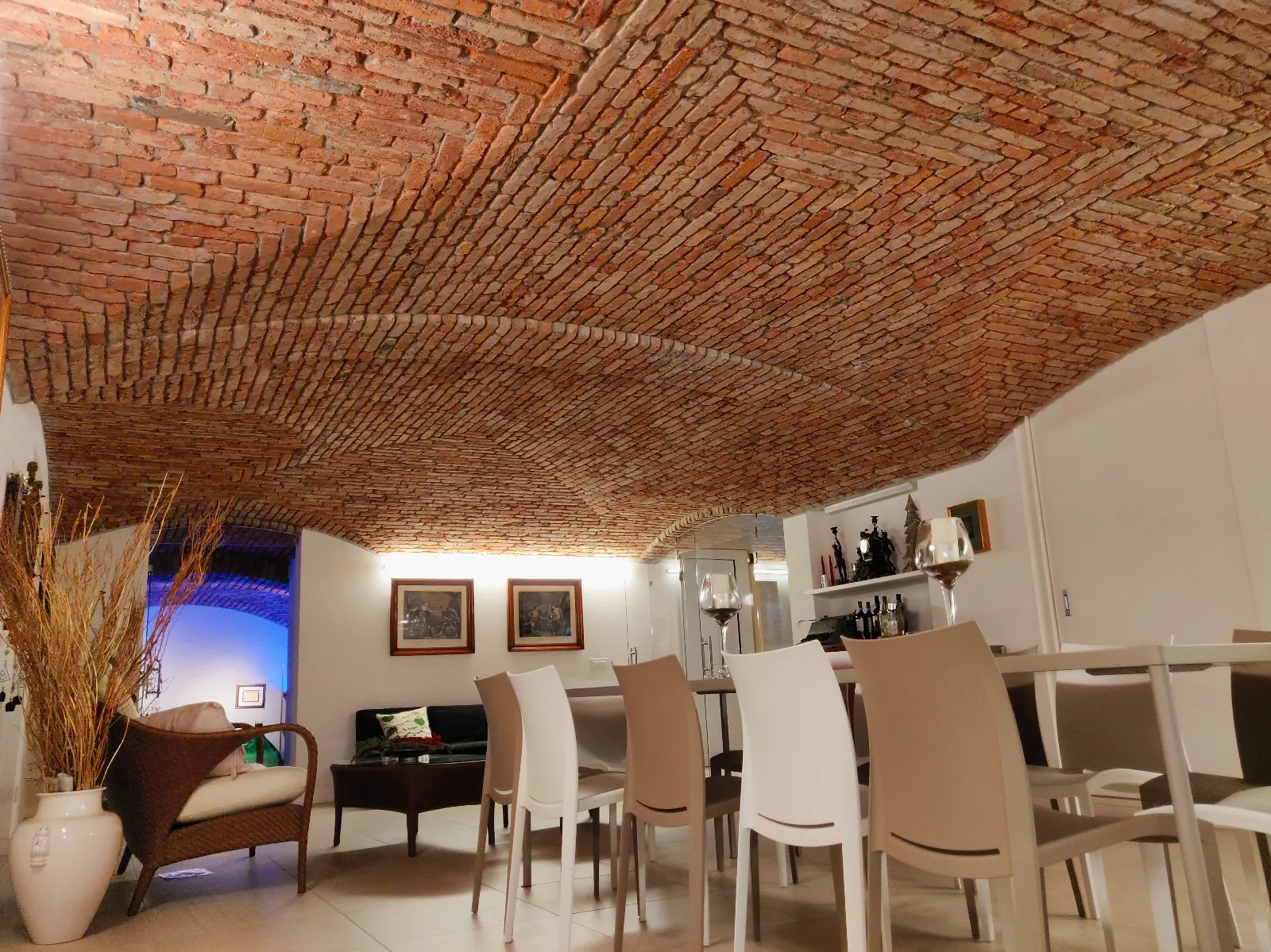
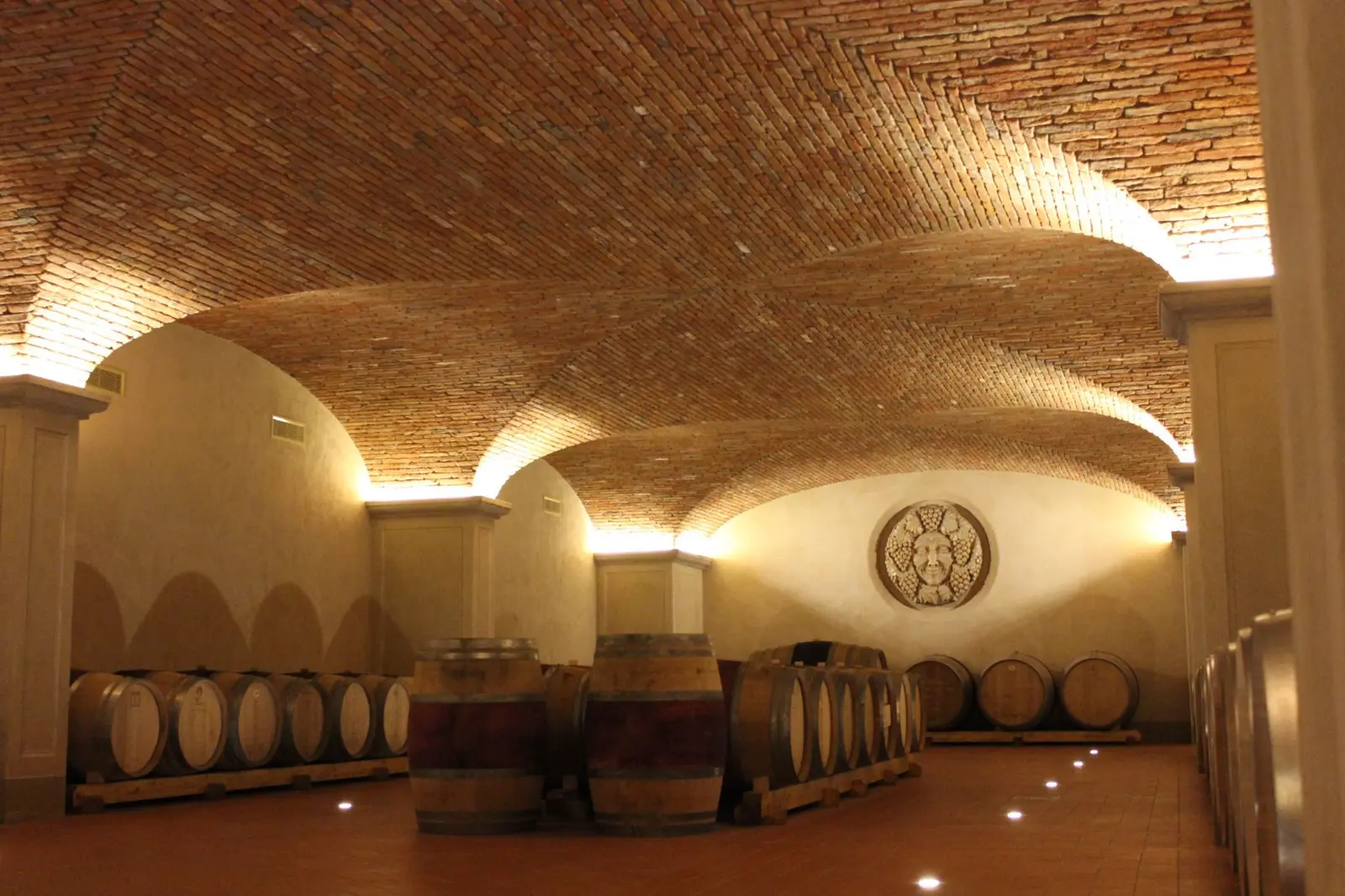
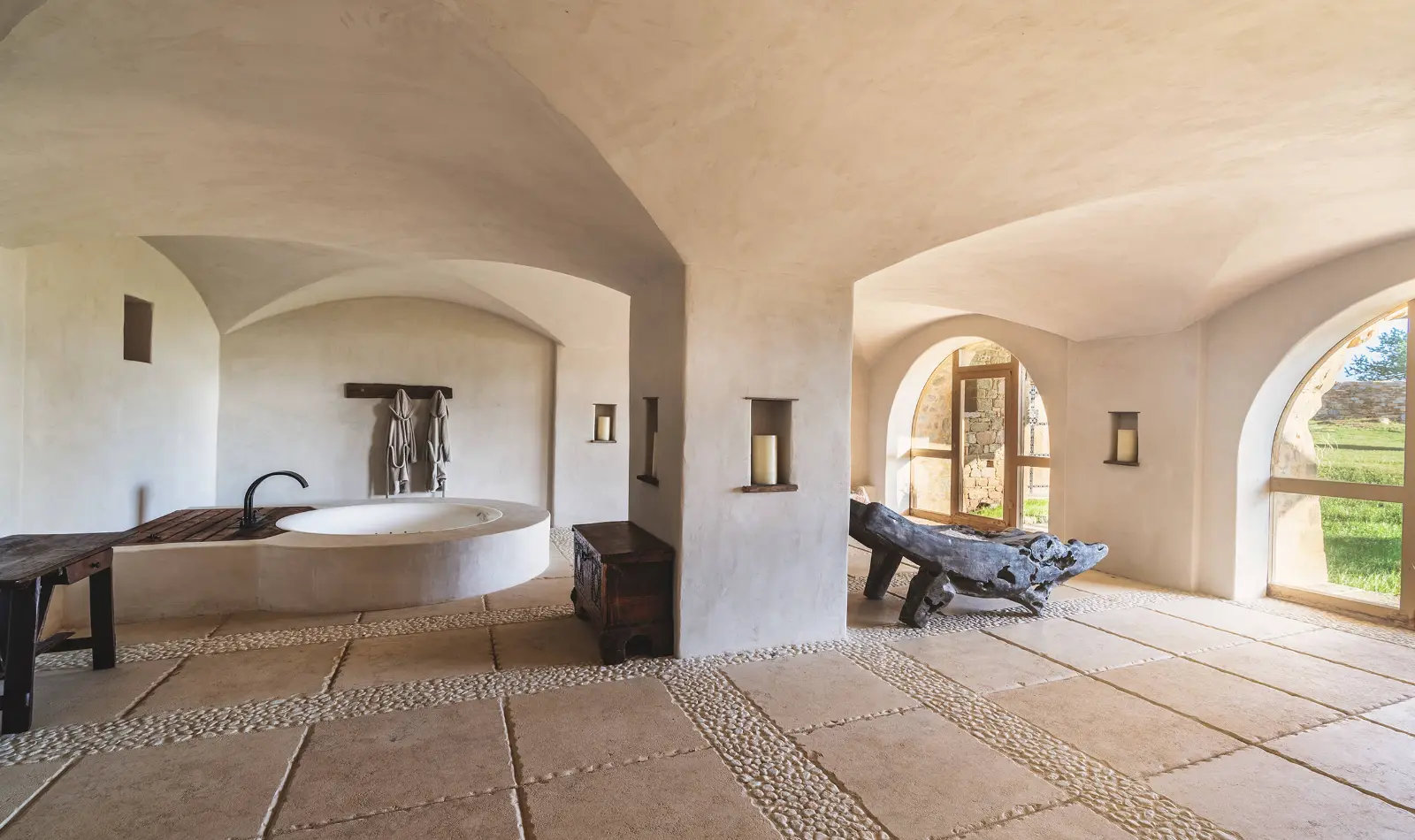
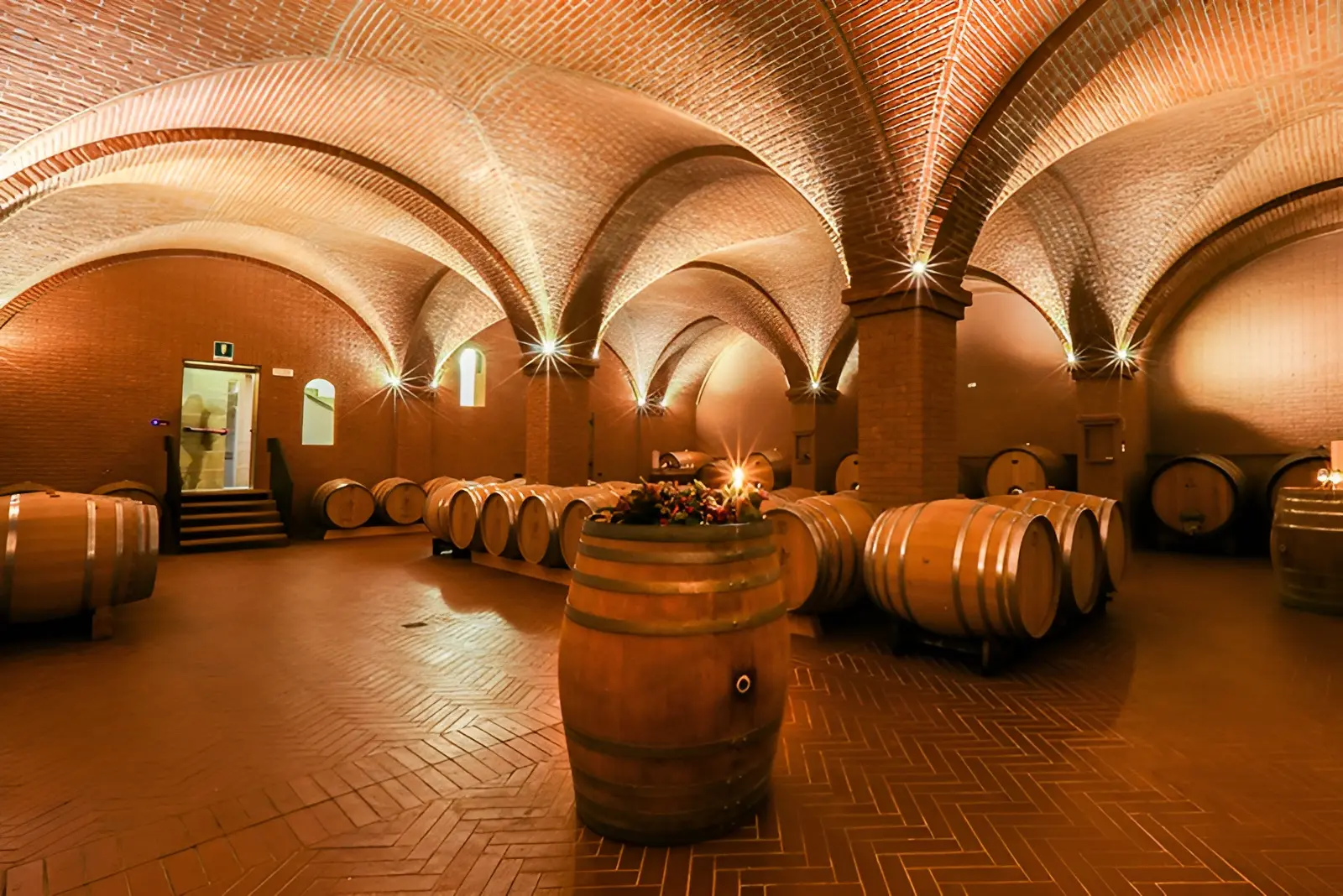
A brick vault overhead changes the geometry of everything beneath it. The curve pulls the eye upward and makes even an ordinary room feel taller and more generous than its measurements. Barrel, cross or sail — each form ties the space to a thousand years of building tradition. One ceiling, and a fitted kitchen becomes architecture.

Warmth No Modern Material Can Fake
The most common complaint about contemporary kitchens is not about function — it is that they feel cold. Clinical whites, mirror glosses and machined surfaces make for striking showrooms and chilly rooms. Brick solves this at the level of physics as much as feeling. Its palette sits entirely in the warm spectrum — terracotta, ochre, amber — and its texture catches low light instead of bouncing it back, so morning sun and evening candlelight both travel softly along the curve of a vault.
There is a subtler advantage: a brick kitchen looks better with life happening in it. Steam, a crowded worktop, chairs pulled out of place — the room absorbs it all gracefully, where a high-gloss kitchen punishes every fingerprint. This is what "warm and stylish" actually means in practice: a space that flatters food, wood and, above all, the people in it.
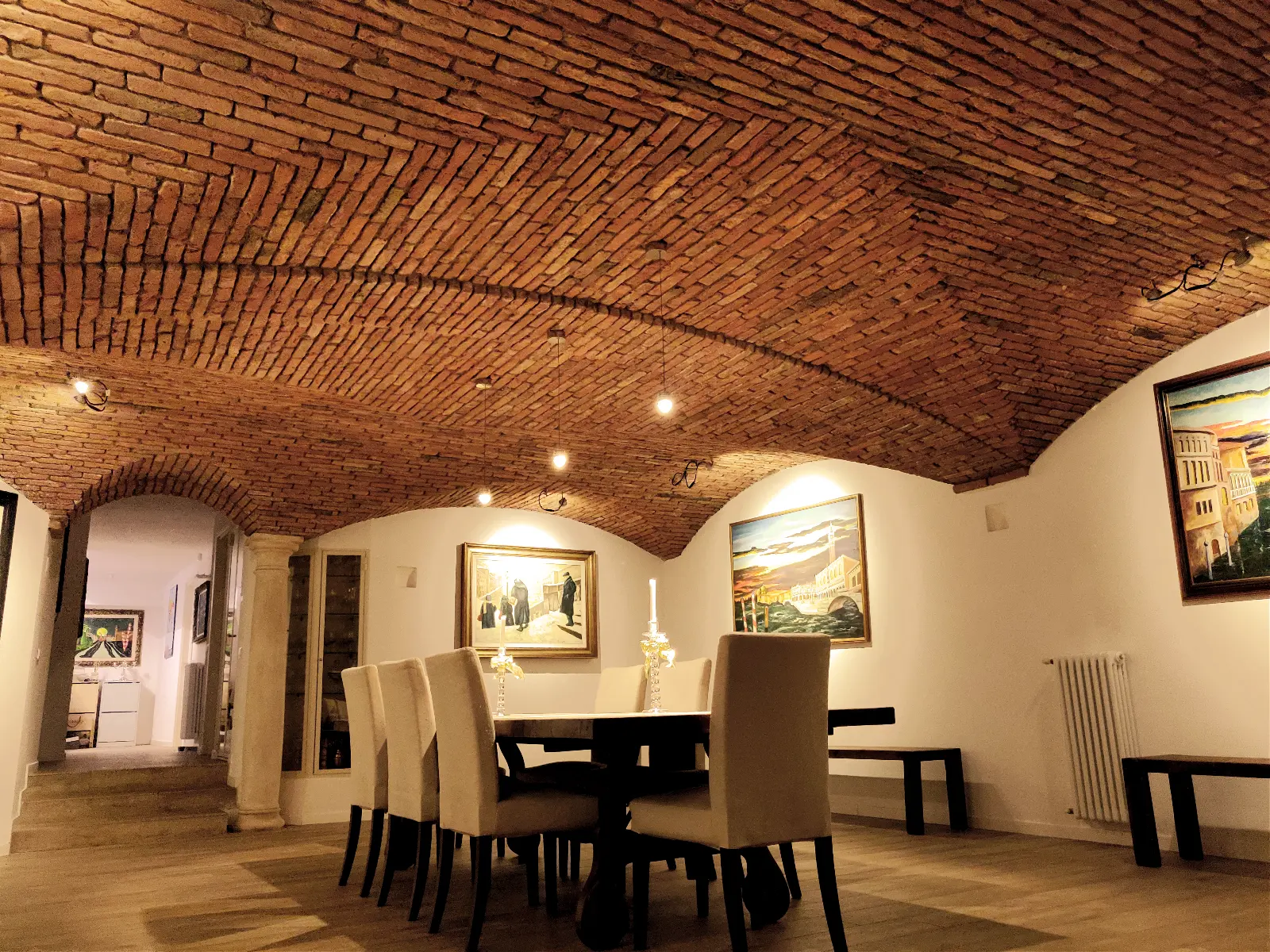
Old-World Shell, Contemporary Soul
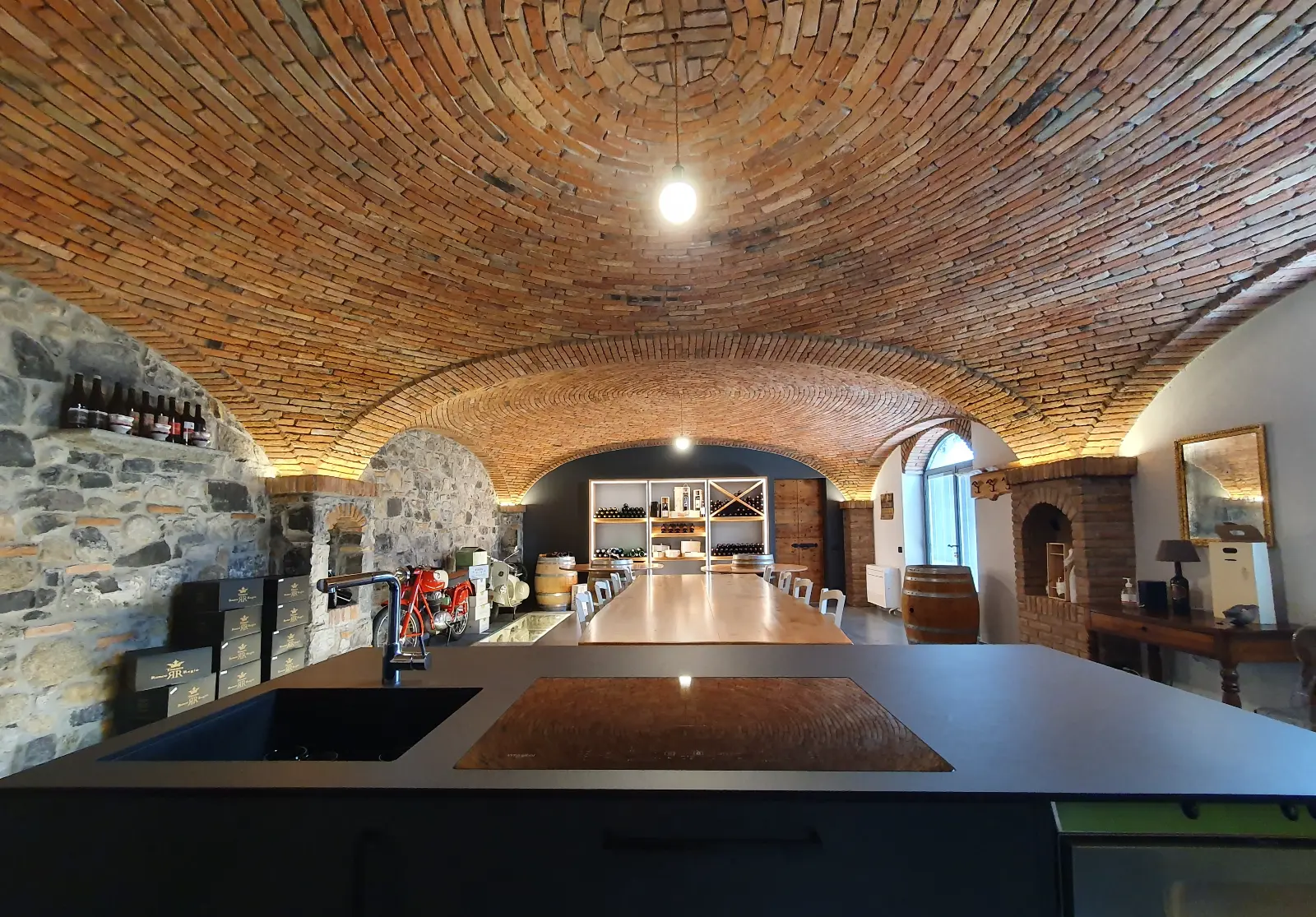
A common misconception is that exposed brick commits you to rustic furniture and wrought iron. The most striking kitchens being designed today do precisely the opposite: flat-front minimal cabinetry, a monolithic stone island, professional steel appliances — set beneath a hand-laid antique vault. The contrast is the point. The ceiling brings warmth, texture and history; the kitchen below brings precision and calm.
Architects and interior designers keep returning to this pairing because it works in both directions. In a period property it keeps the renovation honest. In a modern build it delivers the one thing that cannot be specified from a catalogue — age. And because the shell is timeless rather than fashionable, the kitchen beneath it can be updated for decades without the room ever feeling dated.
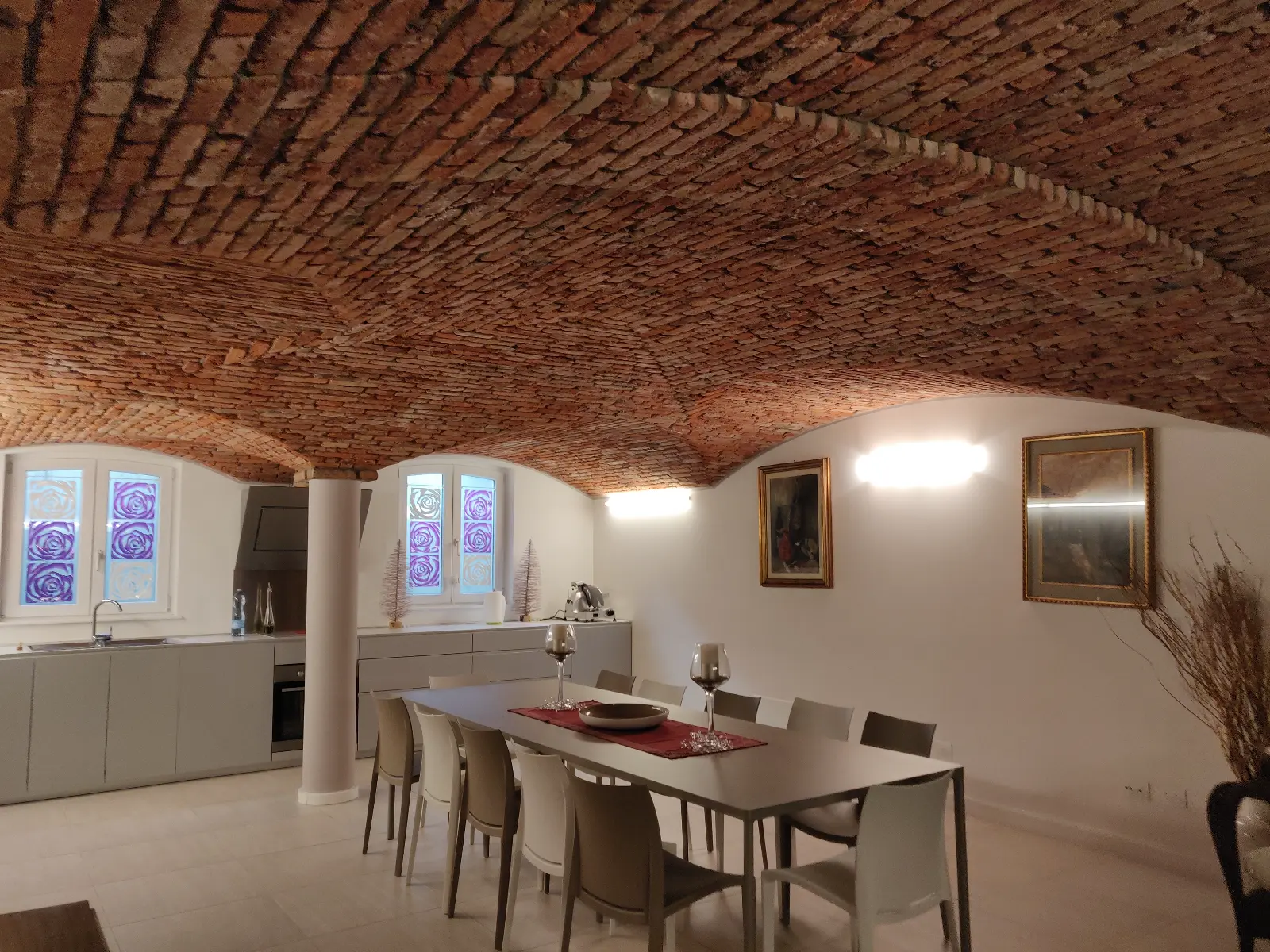
Born from Fire: Performance for the Hardest-Working Room
Romance aside, the kitchen is the most demanding environment in the house: heat, steam, smoke and daily use that would exhaust most finishes. It is worth remembering what brick actually is — clay fired at around a thousand degrees. It does not scorch, warp or peel, and it does not fear the steam rising off a Sunday's worth of pots. For centuries, Italian estates built masonry vaults precisely above their kitchens and hearths, because fired brick was the one ceiling that shrugged at fire.
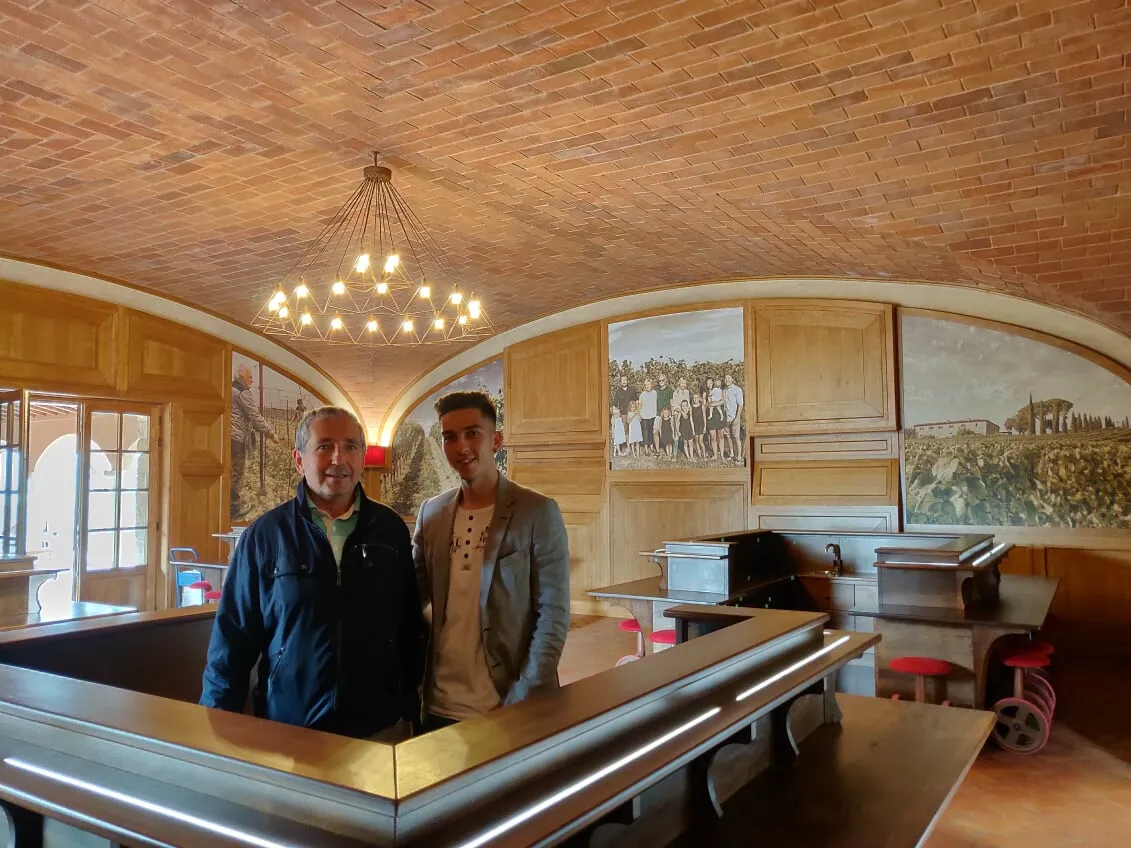
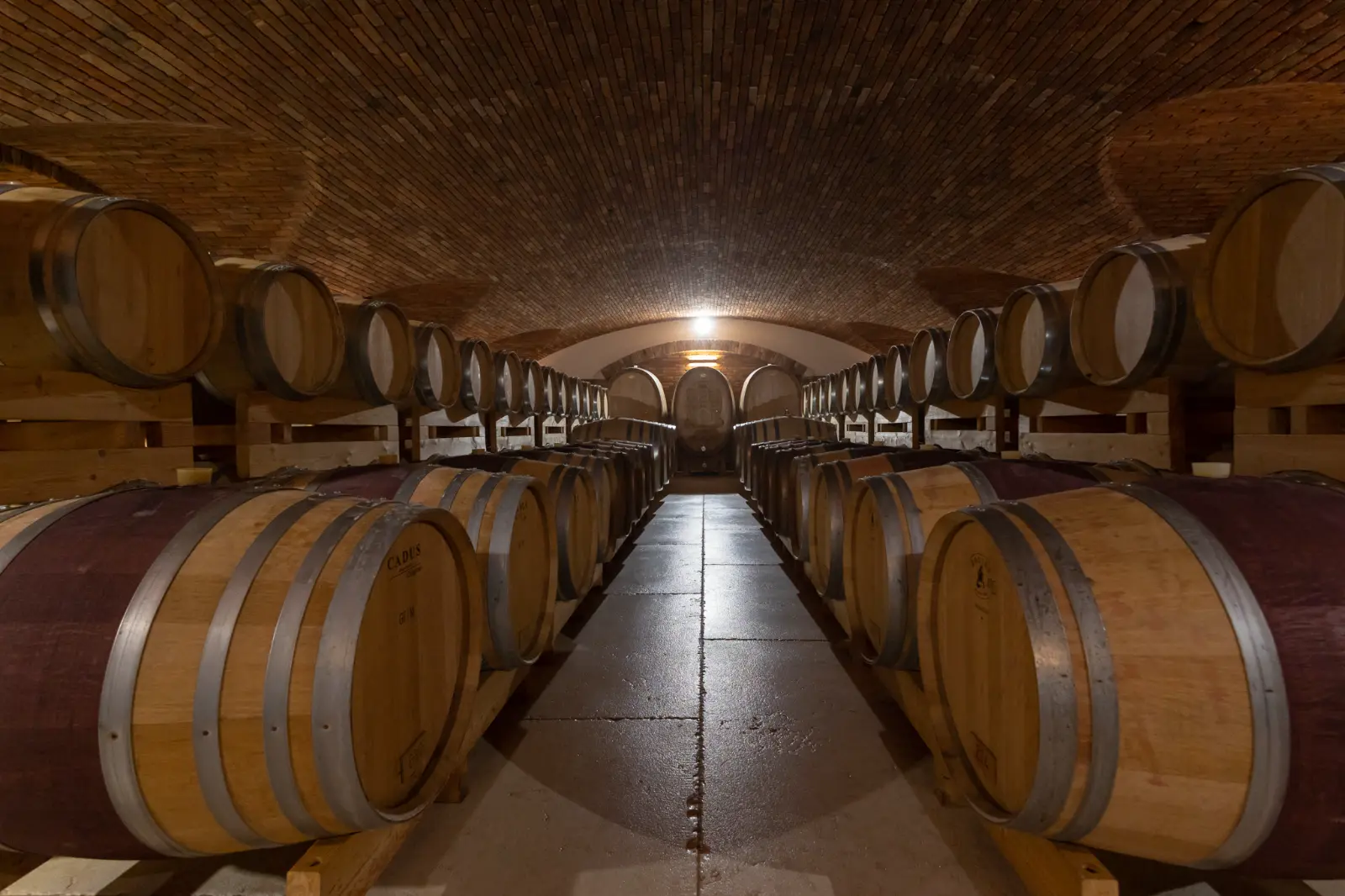
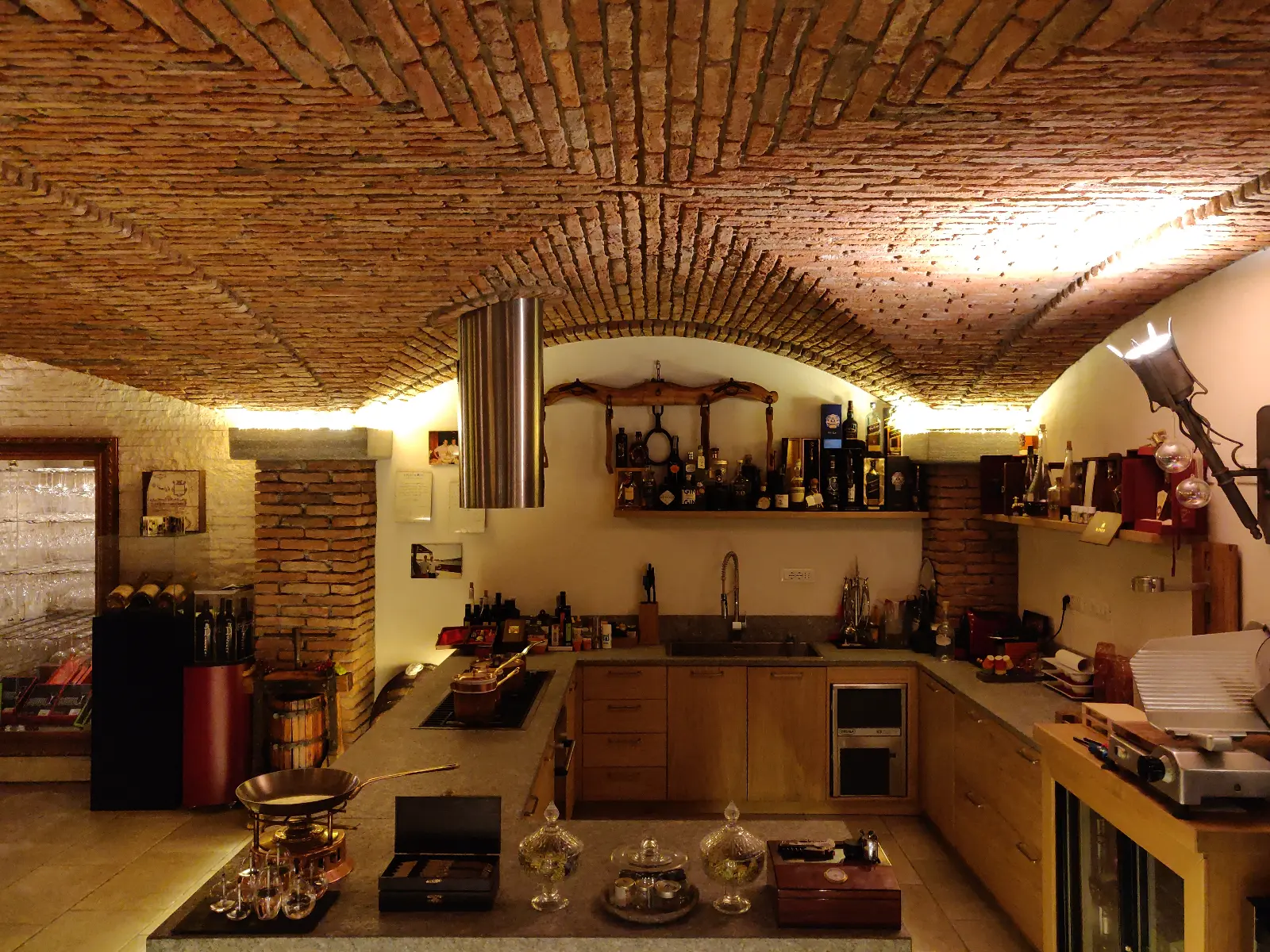
The performance goes beyond resilience. Terracotta breathes, buffering the humidity swings of a working kitchen instead of trapping them. And the acoustics change everything in an open-plan home: a curved brick ceiling softens the clatter of pans and the hum of a dinner party instead of bouncing it back off flat plaster. The kitchen in the photograph belongs to a professional chef — he built it beneath reclaimed brick vaults after the same craftsmanship had kept his wine cellar in perfect condition for over a decade.
The Restaurant Effect: a Room People Remember
There is a reason so many of Italy's most loved restaurants seat their guests beneath brick vaults: restaurateurs know that atmosphere is half the meal. The same dish, the same wine, lands differently in a room with weight and history overhead. They invest in vaulted dining rooms because memorable rooms bring people back — and what works on paying guests works even better on the people you love.
Bring that logic home and the kitchen stops being a workstation and becomes the destination. The aperitivo that was supposed to move to the living room never leaves the island. Guests who were promised a quick dinner are still at the table at midnight. If you love to host, this is the room your friends will talk about on the way home — and remember years later.
Beyond the Kitchen: One Vaulted Space for Cooking, Dining and Wine
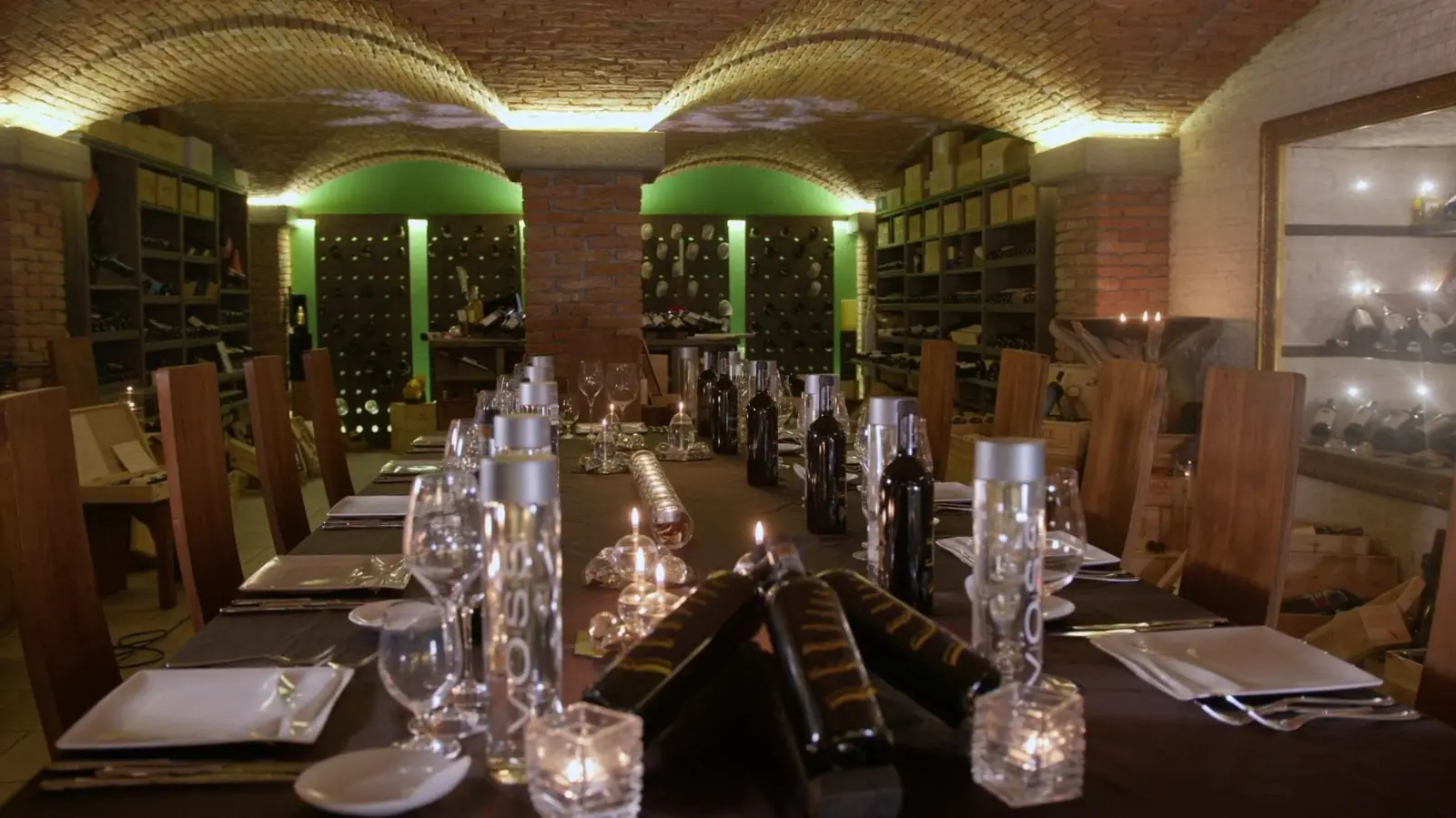
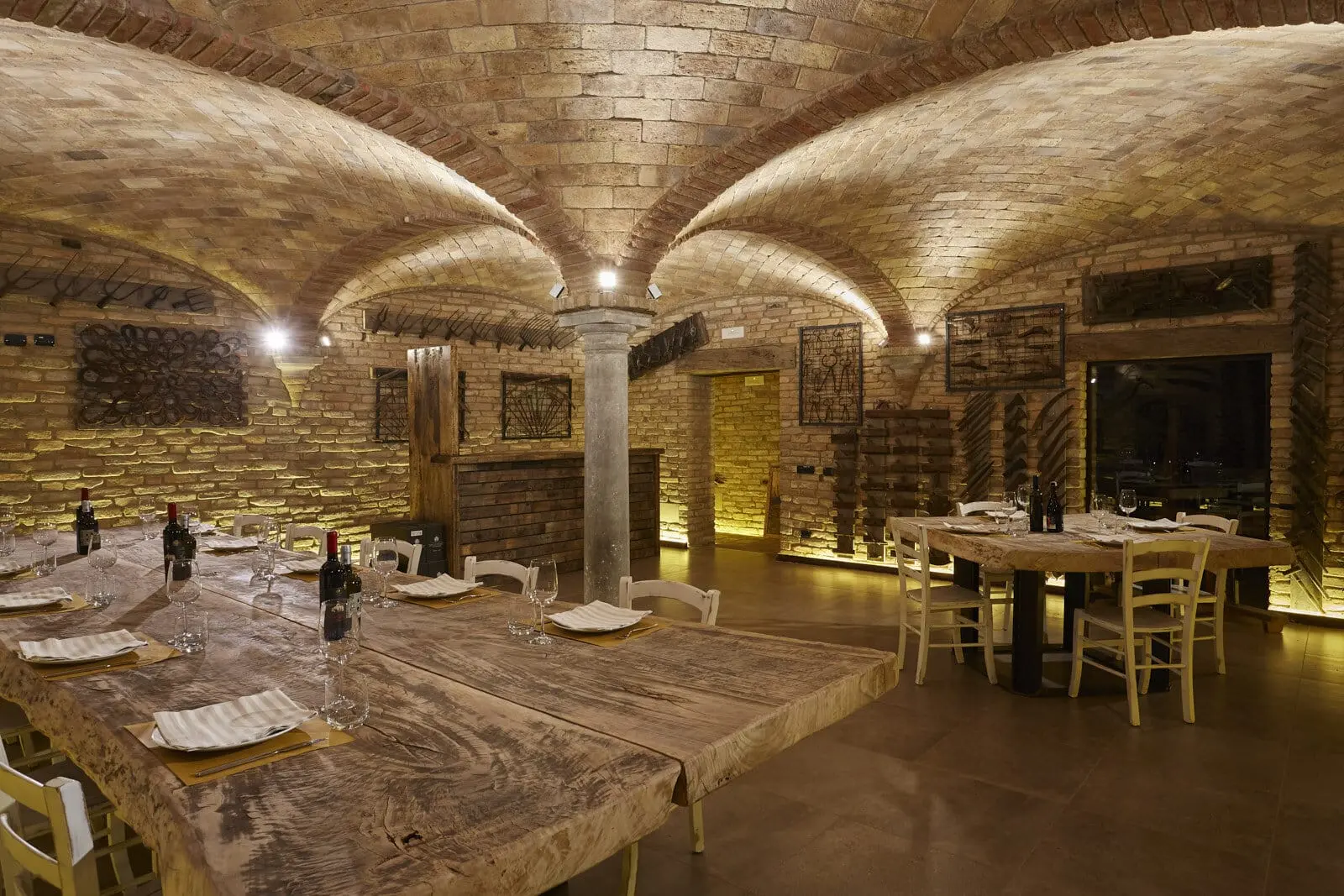
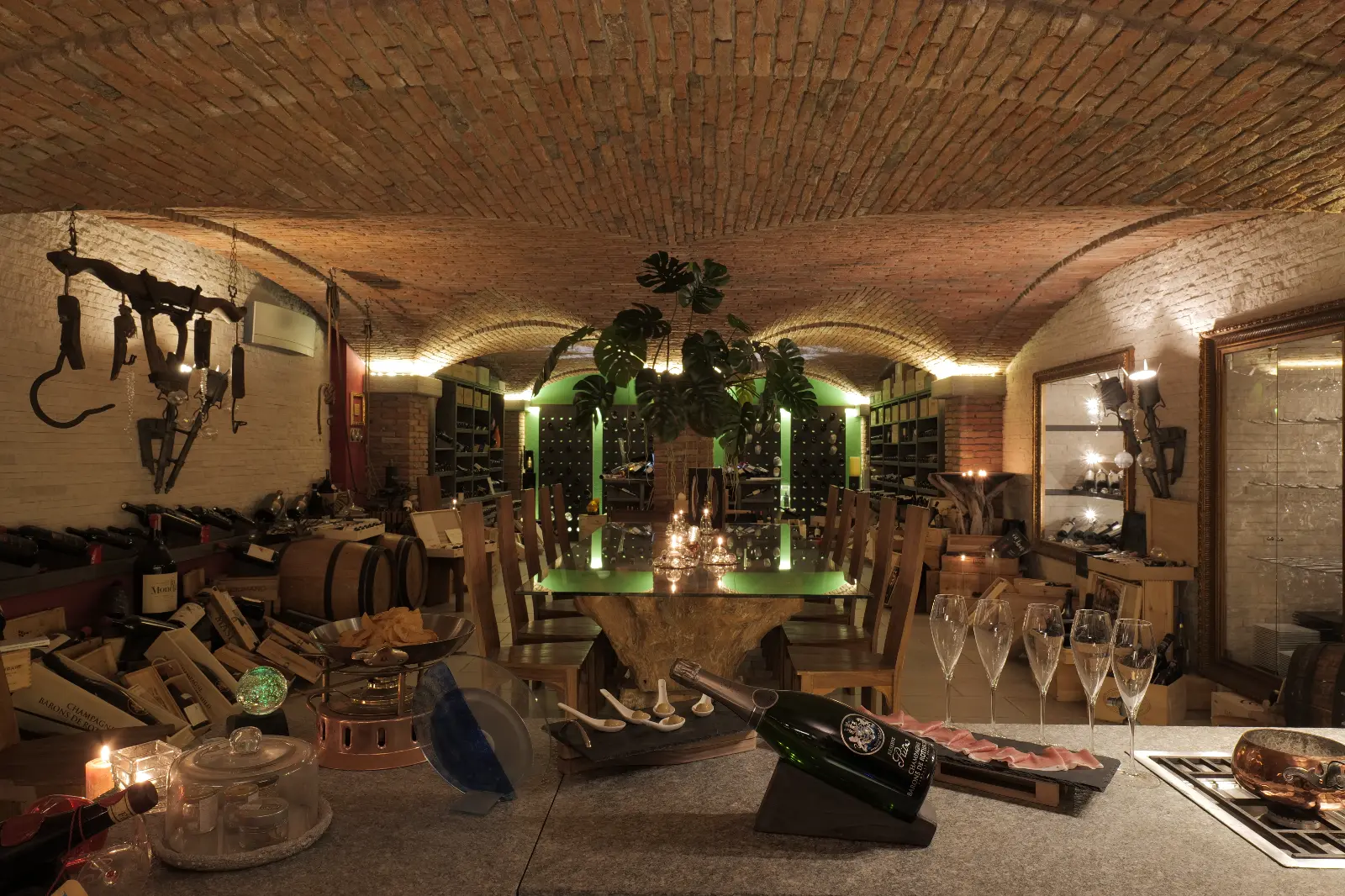
The strongest projects rarely stop at the stove. Under a sequence of vaults, the kitchen, the dining table and the wine wall become chapters of a single room: arches mark the transitions, and the ceiling carries your eye — and your guests — from the hob to the table without a single wall in between. It is the modern, open-plan heir of the northern Italian taverna: the vaulted floor of the house where the long meals have always happened.
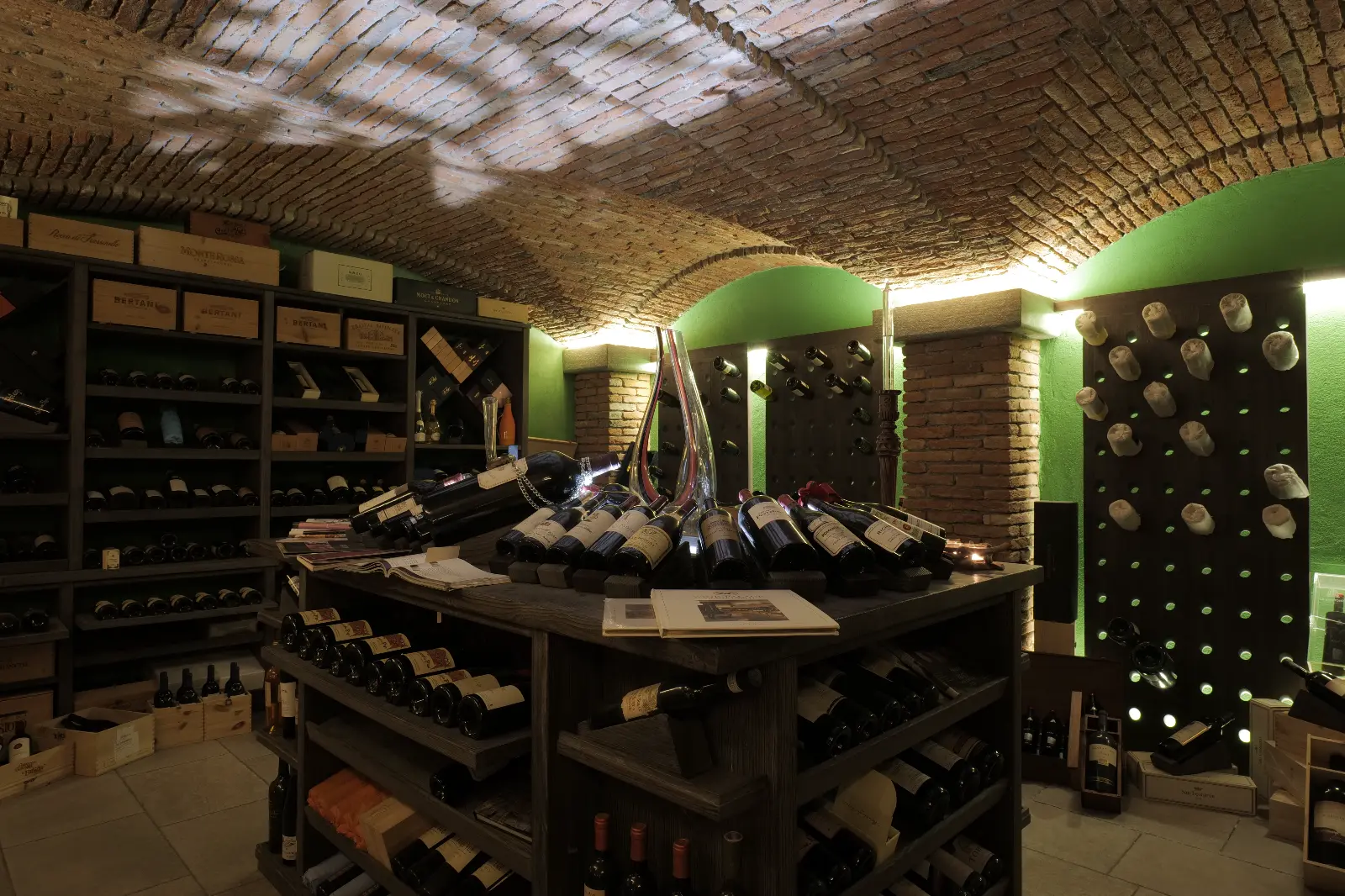
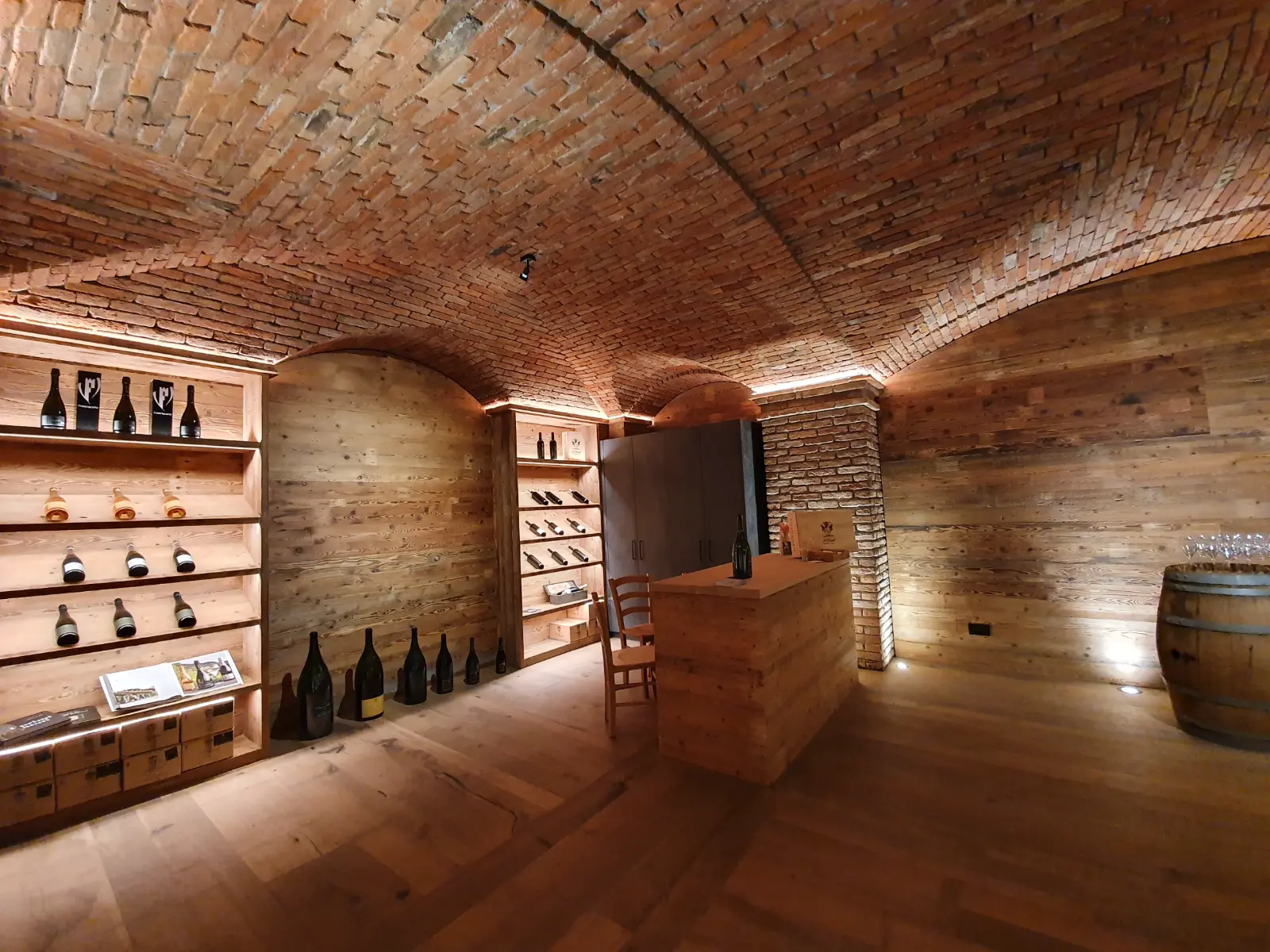
And where there is a floor below, the same language can continue downward — a tasting room or cellar beneath the same brick sky, so that dinner and the bottle that crowns it are only a staircase apart.
Space, Height, Light: a Short Practical Guide
Practical questions decide whether a vision becomes a project, so here are honest answers to the four that matter most. The good news: a vaulted kitchen adapts to far more situations than most people assume.
- Space. The geometry scales — from a compact galley kitchen under a single barrel vault to an open-plan family floor under a sequence of sails. Even one vaulted bay above the island can carry the whole room.
- Ceiling height. The most persistent myth is that vaults demand height. Built by expert hands, a brick vault can take as little as 5 cm of thickness at the crown, its central point; the curve deepens only towards the walls. And because the geometry draws the eye upward, the kitchen ends up feeling taller, not lower.
- Extraction and services. A vaulted kitchen is still a modern kitchen. Hood, flue, wiring and lighting are planned into the design before the first brick is laid, so steam and cooking smells are handled exactly as they would be under a flat ceiling — invisibly.
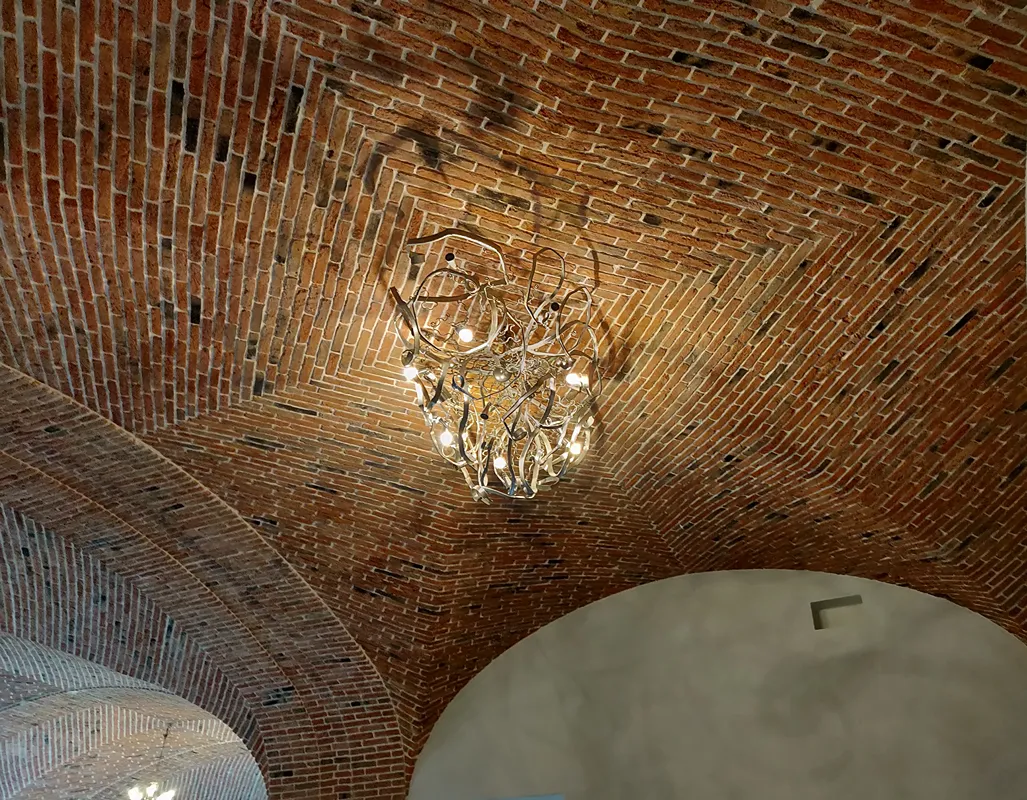
- Light. No surface rewards light like a vault. Conceal a warm LED line where the curve springs from the wall and the texture ignites; add a single pendant — or something braver — at the crown, and the brick does the rest.
Why Choose Pietrantiche
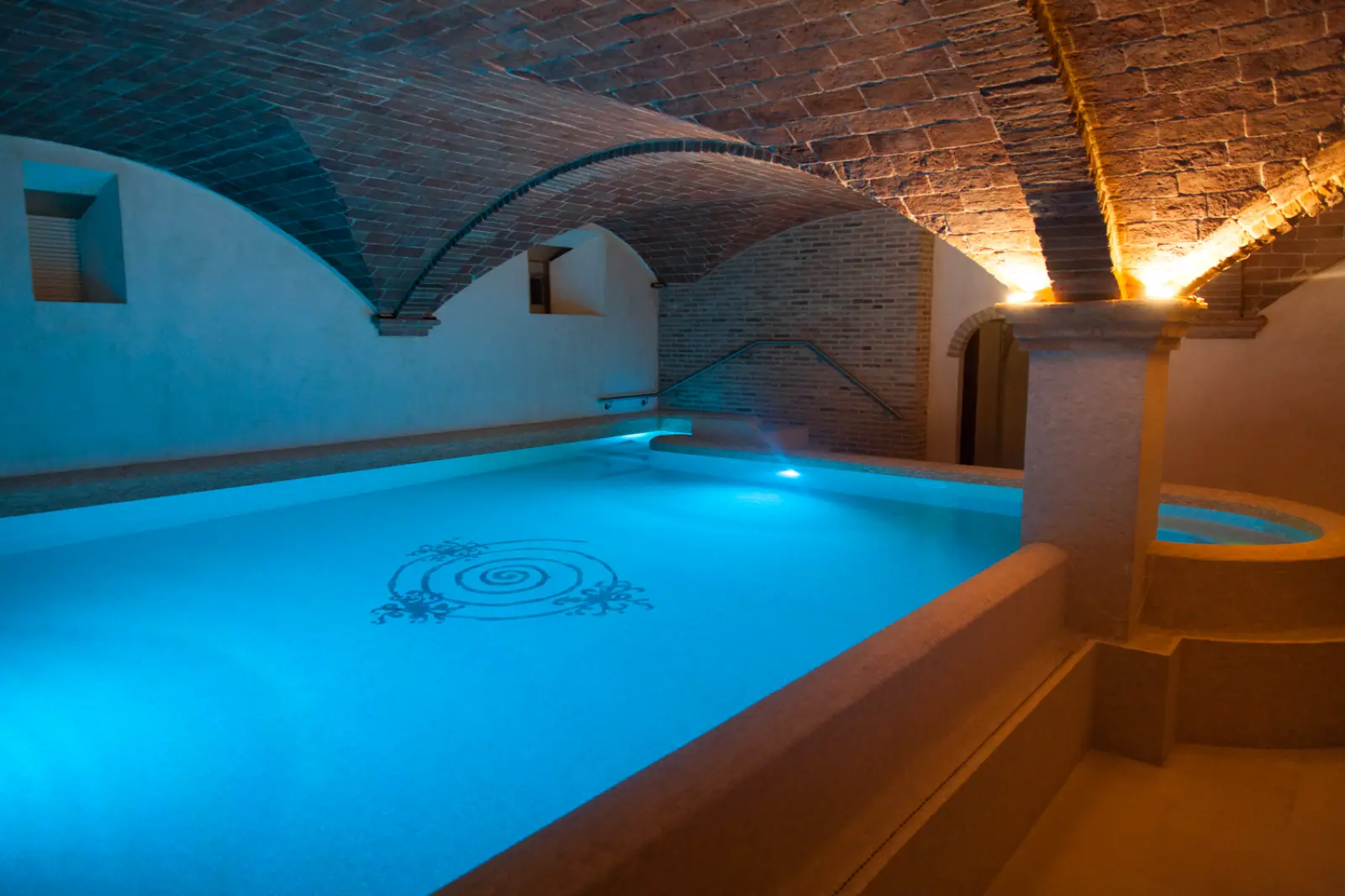
One last thing, in the interest of full transparency: every kitchen and every space pictured in this article — every vault, arch, column and niche — was built by the same hands. They belong to Pietrantiche, the Italian company that architects and homeowners across Europe regard as the reference point for masonry architecture and handmade vaulted ceilings.
If you decide your kitchen deserves a real vault rather than an imitation, this is what sets them apart:
- Decades of experience. Pietrantiche is a family-run company where the craft is handed down from father to son, with vaulted kitchens and living spaces built for private homes, historic estates, restaurants and resorts in Italy and around the world.
- A method that exists nowhere else. Using exclusively antique bricks reclaimed from 18th- and 19th-century Italian farmhouses and estates, every vault is laid by hand in their workshop as prefabricated sections, then assembled on site with millimetric precision in a matter of days — needing as little as 5 cm at the crown, without turning your home into a building site.
- Total customisation. Geometry, brick blend, lighting: every detail is designed around your room, with realistic 3D renders that let you walk through your new kitchen before a single brick is laid.
As point nine made clear, this is not work to entrust to improvisation. If you would rather skip the search and speak directly with the people who built everything you have just seen, you can reach the Pietrantiche team here.